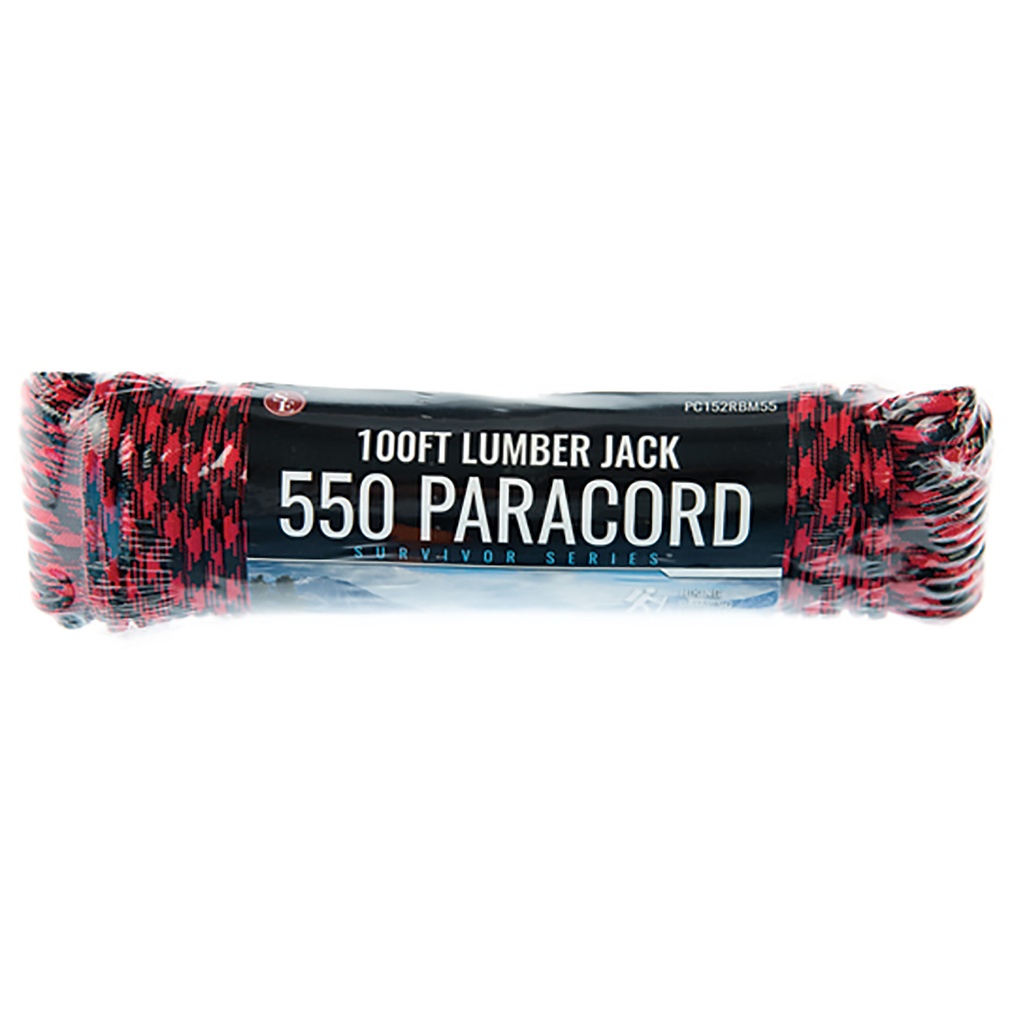
Ridgeline Signal Survival Paracord - Red/Black Camo
You notice it the first time you step off the marked trail and feel that twinge of “I hope nothing goes wrong.” This survival paracord sits coiled in your pack, vivid red/black camo you can grab without thinking. It knots clean, bites down on tarp grommets, and doesn’t feel fragile in your hands. Before long, it’s your default answer: guyline, gear repair, makeshift bootlace. You stop wondering if your cord will hold—and start planning what you can build with it.
You don’t notice the weather shift at first. You just feel the temperature drop, hear the wind cut sharper through the trees, watch the last bit of daylight drain off the ridge. That’s when the quiet calculation starts: how fast can I get shelter up, how well is it going to hold, and what happens if I guessed wrong about my gear?
This is the moment survival paracord either proves you right—or shows you every corner you cut. The cheap stuff frays, slips, or snaps. The real cord digs into the bark, holds a tarp drum-tight, and gives you one less thing to think about when the sky opens up.
Ridgeline Signal Survival Paracord isn’t about specs on a label. It’s about you, tired and cold, pulling one line that you know will hold because it’s failed exactly zero times before.
When Survival Paracord Turns “I Hope” Into “I Know”
Out on a backcountry ridge, there’s a short list of things that simply cannot fail. Fire. Shelter. Your line. Survival paracord is what connects all three—suspending tarps, hanging bear bags, lashing broken gear, improvising what you didn’t think you’d need.
That’s why the core matters. You’re working with 550-grade survival paracord here: seven inner strands bundled inside a tight kernmantle sheath, rated to 550 pounds of breaking strength with a working load you can lean on without flinching. In real life, that means it doesn’t sheer when you cinch down a ridge line on a sapling. It doesn’t crumble when wet. It doesn’t turn fuzzy the third time you pull a knot tight.
And because the braid is dense, not spongy, your knots bite and stay put. You can tie it with gloves on, feel the tension set, and trust that when the wind hammers your shelter at 3 a.m., you won’t be scrambling out into the storm retying everything in a panic.
Survival Paracord You Can Actually See and Grab in a Hurry
There’s a reason this survival paracord isn’t some muted olive that disappears into the dirt. When you’re tired, when it’s getting dark, when your headlamp battery is limping along, it’s the bold red/black camo pattern your eyes jump to first.
You’ll feel that the first time you break camp in low light. That flash of red against moss, rock, leaf litter—it keeps you from leaving a line behind or tripping over a nearly invisible guyline. On the workbench at home, the same color stands out in a tangle of tools and offcuts. You don’t hunt for it, you just see it and pull.
The design click is simple: this is survival paracord built to be found and used, not admired. The 100-foot bundle gives you enough length to run a full shelter, rig a clothesline, and still have extra for repairs or a couple of lanyards. The compact, rectangular wrap slides easily into a pack pocket or gear bin without turning into a hopeless knot ball.
The Feel of Real Cord in Your Hands
There’s a tactile difference you’ll notice immediately. This survival paracord feels solid without being stiff—no waxy residue, no crunchy plastic memory. When you draw it through your fingers, the braid feels tight and even. When you cut it and melt the end, the sheath and core fuse cleanly instead of flaring out into a mess of fibers.
How Survival Paracord Quietly Replaces Half the Junk in Your Pack
If you’ve been carrying a pack long enough, you’ve probably noticed how gear multiplies. Extra straps, random cord fragments, single-purpose doodads you tossed in “just in case.” A good 550 survival paracord roll quietly makes most of that redundant.
One weekend it’s your tarp ridge line and four guylines. The next trip it’s an emergency bootlace that doesn’t snap mid-hike. Back home, you strip a couple of inner strands to stitch a torn strap or tie on a zipper pull that won’t crack in the cold. You start to see line, not as cordage, but as potential structure—what you can hang, bind, drag, or repair with what you already have.
Because this is true survival paracord, not hollow utility rope, those seven inner strands are each their own resource. You can pull them for finer tasks—tying snares, repairing gear, making bracelets or lanyards—while the outer sheath still serves as light-duty cord. One 100-foot roll turns into far more usable material than you expect once you start breaking it down.
Everyday Projects, Same Trusted Line
You won’t put this roll away “for emergencies only” for long. It will migrate to your workbench, your garage, or the trunk of your car. Hauling brush, tying down a load, rigging a quick drag handle on a cooler, stringing lights across a campsite or backyard—once you trust a line in the backcountry, it becomes the default everywhere else.
When Survival Paracord Is the Difference Between Camp and Just Sleeping Outside
There’s a big gap between being outdoors and actually feeling settled in the wild. Survival paracord is one of the subtle tools that closes that gap. It’s the difference between a tarp flapping all night and a shelter that feels solid. Between hanging food sloppily and knowing it’s safely hoisted away from curious noses. Between improvising a sketchy repair and building something you’re sure will last the night.
You’ll notice it most when something goes wrong. When a tent pole cracks and you lash a splint that holds. When wind shifts and you need to re-angle your tarp in a hurry. When rain shows up sideways and you decide to double up lines instead of gutting your kit. With dependable survival paracord, those moments feel like problems to solve, not disasters to endure.
And because this cord is strong without being bulky, you can double or triple lines for higher loads without wrestling with rope that chews up all your pack space. You’re quietly more ready, without feeling like you’re overpacking “just in case.”
Questions People Ask Before Buying Survival Paracord
Is 550 survival paracord strong enough for serious outdoor use?
For most camping, hiking, and survival tasks, yes—550 survival paracord is the standard for a reason. With a 550-pound breaking strength and a solid working load, you can trust it for shelter rigs, haul lines, bear bags, and general camp use. It’s not climbing rope, but it’s serious line for real-world conditions.
What can I actually do with 100 feet of survival paracord?
More than you think. A single 100-foot roll of survival paracord can run a tarp ridge line, stake out multiple guylines, hang a bear bag, and still leave extra for bootlaces, zipper pulls, and emergency gear repairs. If you strip the inner strands, you get even more fine cordage for stitching, tying, and crafting.
Will this survival paracord hold up if it gets wet or muddy?
Quality 550 survival paracord is built to handle wet, muddy, and cold conditions without turning useless. The tight sheath resists abrasion, and the nylon core doesn’t rot from a few wet nights. Rinse it, dry it, and it’s ready to go again—no crunchy stiffness, no crumbling outer layer.
Is bright red/black camo survival paracord a good choice for the backcountry?
For most people, it’s better than low-visibility cord. The red/black camo pattern is easy to spot in low light, which helps you avoid tripping over guylines and makes it easier to break camp without leaving anything behind. Unless you need true concealment, visible survival paracord is usually the smarter option.
Later, when you’re back from the ridge, you’ll notice a quiet shift. That coil of survival paracord isn’t “emergency gear” anymore—it’s just your line. It’s already been the backbone of a fast shelter, the fix when gear failed, the reason you didn’t spend a night chasing flapping tarps in the wind. Next time you shoulder your pack, you won’t wonder if your cord will hold. You’ll just feel the weight of it, red and black and ready, and know that when conditions turn, you’ve already solved one of the most important problems a backcountry traveler faces.