Silent Ancestry Hand-Forged Samurai Sword - Black Saya Gold Crest
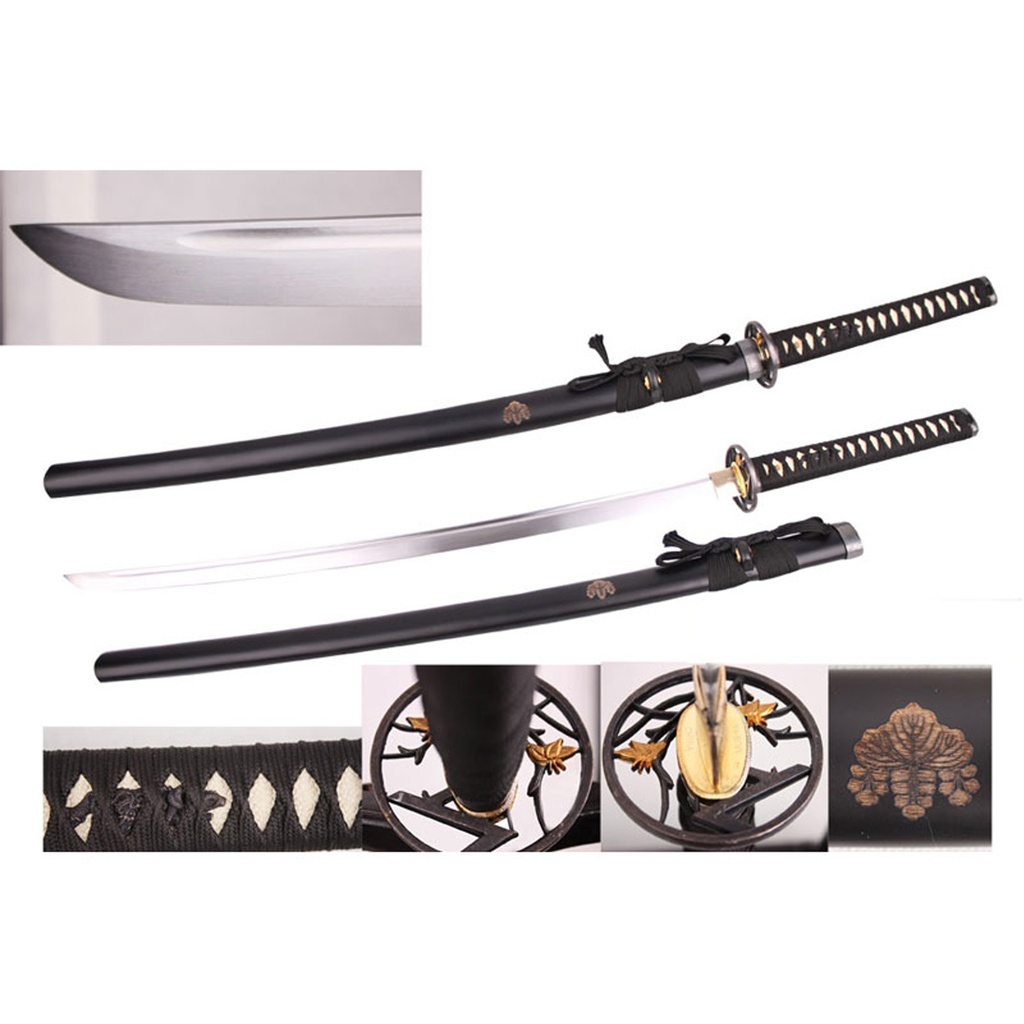
You don’t pick up this samurai sword to show off. You reach for it the way you’d open a family chest you probably shouldn’t touch—half reverence, half curiosity. The hand-forged 1045 high carbon steel and the black saya with its gold crest feel less like décor and more like a quiet oath. The polished katana blade, the rayskin grip, the floral tsuba—each detail reminds you you’re not playing at being a warrior. You’re choosing what kind of ancestor you want to become.
You don’t buy your first real samurai sword because you “need” one. You buy it because some part of you is tired of plastic, shortcuts, and pretending. One evening, you’re standing in your living room, lights low, and you slide a hand-forged katana from a black saya for the first time. The polished steel catches the ambient light, the floral tsuba glows softly with gold, and you realize this isn’t just a collectible. It’s a line in the sand between the version of you that browses and the version that commits.
When a Hand-Forged Samurai Sword Feels Like It Was Meant for You
A lot of people search for a “samurai sword” and end up with something that looks the part but feels dead in the hand. You’re not interested in wall décor that rattles in the scabbard. You want to feel that subtle, living tension of real steel, the balance that asks you to stand a little straighter when you hold it.
This hand-forged samurai sword answers that want the first time you draw it. The 41-inch length isn’t some fantasy exaggeration—it’s the familiar katana profile you’ve seen in dojos and history books: a curved, single-edged blade with a pronounced tip and a visible bo-hi running the spine. You feel the 1045 high carbon steel in the way the blade tracks your movement, not fighting you, not wobbling—just following your intent.
What this means for you is simple: when you practice a cut in the backyard or just rehearse a draw in front of the mirror, you aren’t miming. You’re training with a true samurai sword that responds like a partner, not a prop.
Why This 1045 High Carbon Steel Samurai Sword Holds Your Respect
If you’ve ever handled a bargain-bin blade, you already know what you never want again: chalky metal, questionable edges, that nagging doubt that it might bend if you breathe on it wrong. This is where 1045 high carbon steel and hand forging earn their place in your story.
1045 isn’t picked to impress spec sheets; it’s chosen because it gives you a real cutting edge with toughness that forgives mistakes. It’s oil- or water-quenched, then tempered so it doesn’t turn brittle. In your hands, that translates to a katana you can actually swing without fear, a blade you can maintain with a stone and oil instead of babying like a museum piece.
The polished finish isn’t just for shine—it lets you track the line of your cut in reflections, lets you see how cleanly the edge meets the air. You’ll catch subtle details in the steel grain under good light, and that becomes part of the ritual: wipe down, inspect, re-sheath. The blade teaches you patience every time you care for it.
The Moment the Details Start to Matter
There’s a point when you stop seeing a samurai sword as one solid object and start noticing the relationships between parts. That’s when this piece really opens up. The gold-colored habaki at the base of the blade sits snug against the tsuba, giving you that reassuring, clean click when you seat the katana back into the saya. It’s a small sound, but you’ll find yourself listening for it every time. That’s how you know it’s home.
Carrying a Traditional Samurai Sword Into Your Everyday Spaces
You may never wear armor or step onto a battlefield, but you still live with pressure, with expectations, with moments you either rise to or shrink from. Owning a traditional samurai sword won’t magically solve that—but it does change the way you move through your own space.
The black saya with its gold crest doesn’t scream for attention. Leaned in a corner, set on a stand, or mounted on the wall, it registers more like a calm presence than a trophy. Visitors notice it eventually. Some ask. Some just look a little longer at you. Either way, you’ve quietly reframed who you are in your own home: someone who chooses symbols with weight.
Pick it up by the black sageo cord, feel the matte or satin finish of the scabbard under your palm, and you get that moment of transition: ordinary day on one side, your private practice on the other. That’s where a samurai sword belongs in modern life—not as a relic, but as a line you cross when you decide to be fully present.
How It Actually Feels in Your Hands
The first surprise is the grip. The tsuka isn’t some glossy, slippery handle. It’s a traditional rayskin core wrapped in black cord, woven in that familiar diamond pattern you’ve seen a hundred times online. Only now it’s under your fingers—textured, warm, a little rough where the ito crosses. You feel the off-white samegawa beneath, anchoring your grip when your palms get a little damp.
The ornate tsuba sits between your hand and the blade, an openwork floral motif with subtle gold accents. At a glance, it’s beautiful. Up close, it’s a reminder that strength and refinement aren’t opposites. You can be both.
When Choosing a Samurai Sword Becomes a Statement, Not a Hobby
If you’ve been comparing different samurai swords online—carbon steel versus stainless, display-only versus “battle ready,” anime replicas versus traditional katana—you already know how noisy the search can get. You’re not looking for a toy. You’re not ready to drop collector-level money either. You want the real language of the sword without the pretense.
A hand-forged 1045 high carbon steel blade hits that exact middle: more authentic and durable than decorative stainless, more approachable than high-end, hyper-specialized cutters. This gives you a samurai sword you can draw, swing, and maintain without feeling like you’re either play-acting or risking an heirloom.
So what does this mean for you week to week? It means you have something worth slowing down for. Maybe it’s a Saturday morning ritual—clear a bit of space, check the edge, practice a few kata you learned from a sensei or a book. Or maybe it’s ten quiet minutes at night, blade wiped, oil applied, your mind finally off your phone and on one precise task.
Questions People Ask Before Buying a Samurai Sword
Is a 1045 hand-forged samurai sword good for real use or just display?
If you’re planning light cutting practice and regular handling, a 1045 hand-forged samurai sword is a solid choice. It offers a real, sharpened edge and tough, forgiving steel that can handle responsible backyard practice, while still looking refined enough to display when it’s resting in the black saya.
Can I actually train with this samurai sword, or should I keep it on the wall?
You can absolutely train with this sword, as long as you respect it. The curved 1045 high carbon blade, full-length design, and traditional grip give you the right feel for kata, draw practice, and controlled cutting on appropriate targets. When you’re done, the matte black saya and gold crest make it a piece you’ll be proud to keep visible.
What should I know about caring for a traditional samurai sword at home?
You don’t need to be a smith to care for a samurai sword, but you do need a small ritual. Wipe fingerprints and moisture from the polished blade after handling, use a light coat of oil, and avoid hitting hard or unknown materials. Store it sheathed in the black saya, and the steel, wrap, and fittings will age with you instead of against you.
Is this the kind of katana collectors respect, or more of a starter sword?
This sits in that sweet spot: serious enough that collectors recognize the hand-forged 1045 steel, traditional fittings, and rayskin wrap, but accessible enough that it makes sense as your first real samurai sword. It’s the kind of piece that earns its story over time—starting as your “starter sword” and staying because you built memories with it.
Picture one specific night: the house is quiet, the day is finally done. You lift the black saya from its stand, feel the weight settle into your palm, and draw the samurai sword in one smooth motion. The polished blade catches a thin edge of light. The floral tsuba, the gold crest, the black wrap—all of it feels like it has always belonged in your hands. In that moment, you’re not a shopper or a fan. You’re the person who decided their space deserved steel with history in its lines, a hand-forged katana that reflects the discipline you’re still growing into.