Silent Control Professional-Grade Handcuffs - Tactical Black
You know the moment: adrenaline up, variables everywhere, and you’re the one expected to stay in control. That’s where a serious pair of professional handcuffs stops being “gear” and becomes peace of mind. The smooth swing of the bow, the solid click, the black steel weight in your hand—you feel the difference. These are the cuffs you trust when talking, de-escalating, and hands-on work all blur together. You stay calm because your restraint tool is as reliable as you are.
You’ve been here before. Noise, tension, too many eyes watching, everyone waiting to see whether this turns into a story they tell for years—or one they never want to talk about. Your pulse jumps, but your hands don’t shake. You’re already reaching for your professional handcuffs, not because you want to use force, but because you know that when words stop working, control can’t.
When Professional Handcuffs Turn a Volatile Moment Into a Controlled One
There’s a split second between “this is fine” and “this could go bad fast.” In that second, what’s in your hand either calms the scene or adds chaos. With a duty-grade pair of professional handcuffs, you’re not fumbling with flimsy steel or second-guessing your gear. You’re doing what your training drilled into you—smooth approach, clear commands, precise restraint.
That weight you feel—about 10 ounces of solid metal—matters. It sits in your palm with enough heft to feel real, but not so bulky that it slows you down. The oversized .375-inch construction isn’t trivia; it’s the difference between equipment that bends under stress and equipment that shrugs it off. When a subject pulls, twists, or tests the limits, your cuffs answer with the same thing you do: unshaken control.
Why These Professional Handcuffs Feel Different the First Time You Lock Them
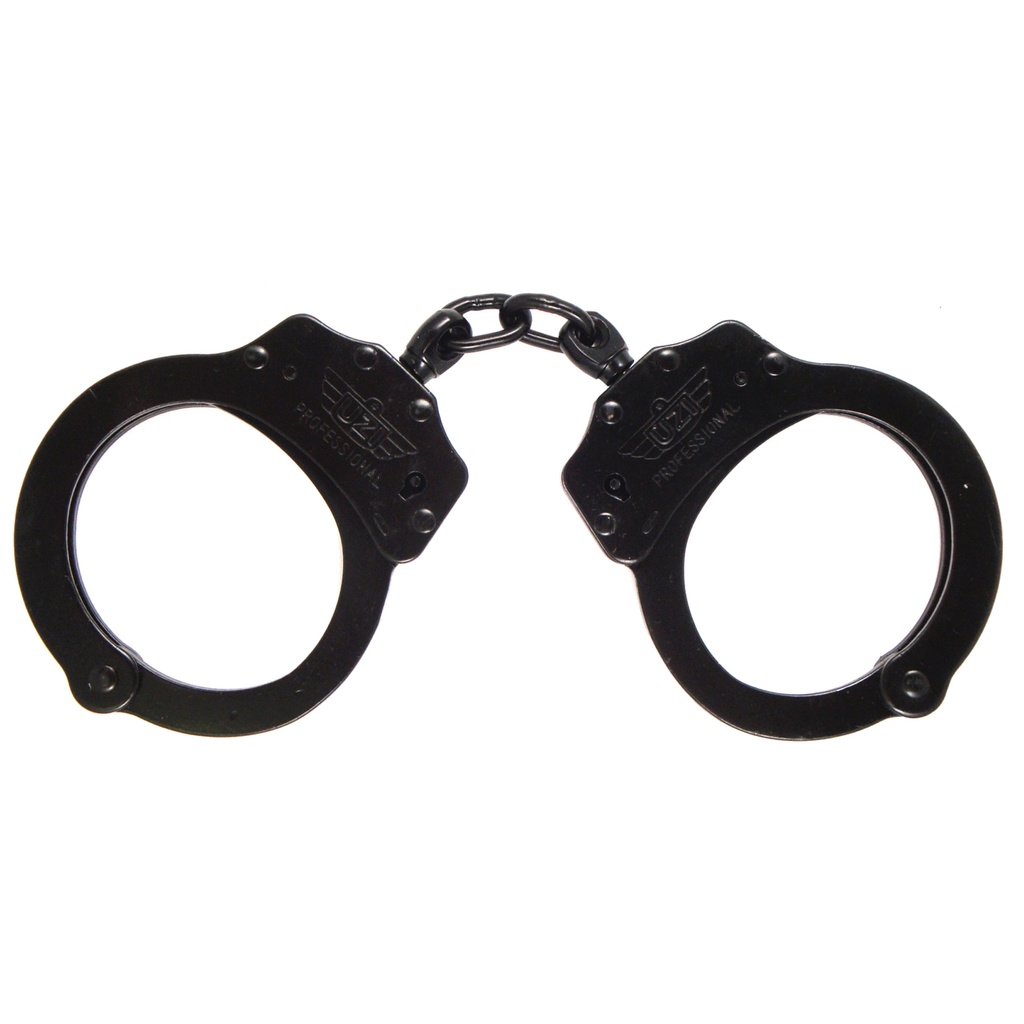
The first time you snap these on someone, you notice it. The bow swings with a clean, confident arc. The ratcheting doesn’t feel crunchy or cheap—it clicks with a solid, deliberate bite. That smoothness isn’t an accident; it’s what happens when thicker metal meets tight tolerances designed for real law enforcement use, not costume gear.
You see it in the details: the compact chain-link that gives you just enough flexibility to maneuver a subject’s hands without losing control, the double-lock pinholes that let you secure the setting so you don’t have to worry about over-tightening. The all-black finish doesn’t scream for attention under streetlights; it just blends in, a quiet piece of tactical restraint that does its job while you do yours.
The Subtle Confidence of Tactical Black
There’s a reason so much serious gear comes in black. On your duty belt or in a security rig, glossy black metal doesn’t glare under headlights, doesn’t reflect every flash, doesn’t distract. It looks like what it is—professional equipment. When you pull these out, people don’t see a toy. They see that you came prepared.
Professional Handcuffs Built for Real Duty, Not Just Display
If you’ve ever handled economy-grade restraints, you already know the difference before you even cuff someone. Lighter weight, thinner metal, edges that feel suspect. You might use them once and then quietly retire them to a drawer. With a professional handcuff built to police standards, you get thicker metal, more mass, and the sense that if something’s going to give, it won’t be your gear.
These come in at around .375 inches thick and roughly 10 ounces, outclassing thinner, lighter economy options that sit closer to .25 inches and under 9 ounces. That might sound small on paper, but in the field, it’s the difference between “I hope this holds” and “I know this holds.” When someone strains against the chain, you’re not doing mental math about whether you bought the cheaper pair. You’re already moving on to the next decision.
Designed Around the Way You Actually Work
You don’t baby your duty gear. It gets knocked into door frames, dragged across concrete, dropped on asphalt, jammed into pouches, and rained on. The metal construction and professional-duty design are built with that in mind. The rivets through the hinge points aren’t decorative; they reinforce the stress areas that take the abuse shift after shift.
And if you’re building a serious security or tactical kit at home, you get the same benefit. Whether you’re a guard, an off-duty cop keeping a personal rig, or an enthusiast who trains regularly, you want restraint tools you can trust in drills, scenarios, and real-world situations.
Carrying Professional Handcuffs in Your Everyday Kit
On your belt, these become part of your rhythm. You feel the black steel resting in their case at your hip or back, a quiet reminder that if things cross the line, you have a way to end it safely. The compact chain-link profile keeps them from feeling bulky, and the professional shape drops into standard cuff pouches without a fight.
Off-duty, maybe they sit in a go-bag, glove compartment, or discrete home kit. They’re not there to make you feel tough. They’re there so that when something unpredictable unfolds—a physical detainment at a security job, a combative subject during a neighborhood watch call, a real-world scenario during training—you don’t just stand there wishing you had more than your hands and your voice.
The Human Side of Carrying Restraint Gear
There’s a strange thing that happens when you start carrying professional handcuffs. You become more aware of the weight of authority. You don’t reach for them casually. You negotiate more. You talk longer. You de-escalate harder. Because you know that when you finally deploy them, it’s serious—and the tools you carry must be as professional as the standard you hold yourself to.
When a Professional Handcuff Makes the Difference Between Chaos and Closure
Imagine this: a single back-up unit still ten minutes out, a subject whose story keeps changing, hands flexing behind their back like they’re deciding something. You’ve seen that body language before. You make the call. In one fluid motion, your hand finds the cuffs, the metal touches skin, the ratchet sings that familiar series of clicks, and just like that, the energy in the scene shifts.
They pull once, hard. The chain holds. The thicker metal doesn’t bow or complain. You double-lock, check fit, and watch their shoulders drop as they realize the fight isn’t going anywhere. The drama bleeds out of the moment, not because you muscled them into submission, but because your restraint gear backed your presence with something unshakable.
Questions People Ask Before Buying Professional Handcuffs
Are professional handcuffs worth it compared to cheaper options?
If you’re using them for real restraint—law enforcement, security, or serious training—yes. Professional handcuffs use thicker, heavier metal and tighter construction, so they hold up better when someone actually fights them. Economy cuffs can work for costume or display, but duty use demands stronger gear.
Can I use professional handcuffs for security work or home defense training?
Many security professionals and responsible civilians use professional handcuffs as part of their kit and training. Just make sure you understand local laws, get proper instruction on safe cuffing techniques, and treat them with the same respect you give any tactical restraint tool.
Are black professional handcuffs legal to carry?
Legality depends entirely on where you live and how you plan to use them. In many places, owning and carrying professional handcuffs is legal for civilians, but using them on someone without lawful authority can get you in serious trouble. Always check your local laws and regulations before adding any restraint gear to your everyday carry.
Do professional handcuffs work with standard keys?
Most duty-grade professional handcuffs are designed around standard-style cuff keys, especially those intended for police or security use. That means if you already have keys on your duty ring, there’s a good chance they’ll work—but always confirm compatibility and keep a dedicated key with the cuffs.
Later, when your shift is over and the noise has finally died down, you’ll unclip your gear and feel that familiar 10 ounces of metal in your hand. The black finish is a little scuffed now, the chain maybe a bit marked from use, but the shape, the strength, the action of these professional handcuffs are unchanged. You set them down knowing something simple and steady: you walked into tension with calm, you walked out with control, and the tools you chose met the standard you set for yourself.