Silent Guardian Minimalist Shirasaya Wakizashi - White Wood
You don’t hang this wakizashi just to fill a blank wall. You choose it like you choose your words—carefully. The minimalist shirasaya handle, the clean white wood, the single black line and red crest all tell a quiet story about control. This Japanese-inspired short sword doesn’t shout for attention; it rewards the kind of person who enjoys the pause before the cut, the breath before the decision. If your space is curated, not cluttered, this wakizashi will feel like it was always meant to be there.
You notice it first in the silence. Not the blade, not the color, just the way your eyes keep drifting back to that one clean line of white wood and steel. The room hasn’t changed, but something in it feels more composed now. As if your space finally caught up with the way you’ve always wanted your mind to feel—ordered, deliberate, unhurried. That’s the moment a minimalist wakizashi doesn’t feel like decor. It feels like a decision you’ve already made about who you are.
Why This Minimalist Wakizashi Feels Like It Chose You
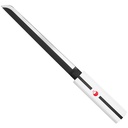
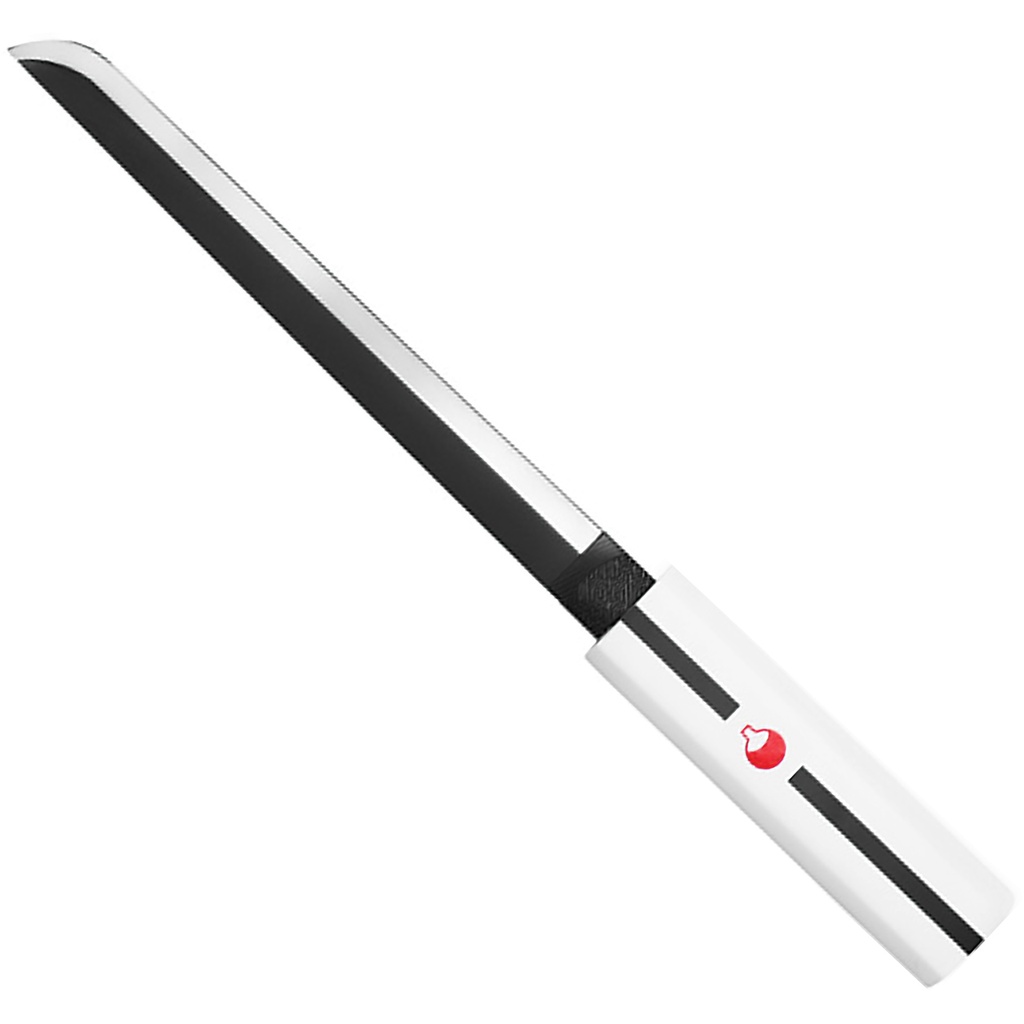
When you picture a minimalist wakizashi, you probably don’t picture ornament or noise. You picture clarity. Here, the straight, single-edged stainless blade sits in perfect proportion to a smooth white shirasaya-style handle—no guard, no clutter, just a clean line of intention. At 17.5 inches overall, it’s compact enough to live on a desk, shelf, or wall mount without overwhelming the space, but long enough to read instantly as a real Japanese-inspired short sword, not a toy.
What you feel in your hand is balance. The simple white wood handle carries a single black line and a red crest—nothing more. That restraint is the point. You’re not showing off a weapon; you’re showing that you know when to stop adding. In a world where everything screams for attention, this wakizashi whispers—and the people who notice it are usually the ones you actually want to talk to.
The Design Story Behind This Minimalist Wakizashi
If you look closely, you can see how deliberate every choice is. The blade is two-tone stainless steel: a bright cutting edge against a darker flat, giving you a quiet contrast that draws the eye without shouting. Stainless steel means you’re not fussing over rust or babying it with constant maintenance; you get the clean look of a display piece with the reassuring solidity of real steel.
The handle is pure shirasaya minimalism—straight, block-like, and honest. No faux fittings, no fake aged brass, no dragon carvings. Just white wood, a single vertical black stripe, and that small red crest that feels almost like a seal on a letter you meant to write to yourself. It’s the kind of detail a collector notices up close and a casual guest picks up on only after a second or third glance. That’s the Abbott-style human detail: the moment someone asks, “What does that symbol mean?” and you get to decide what story you tell.
How a Minimalist Wakizashi Changes the Room You Live In
Think about where a minimalist wakizashi actually lives in your world. Maybe it rests on a stand behind your monitor, edge angled just slightly toward you so you catch the two-tone glint when the light shifts. Maybe it anchors a shelf of favorite books and small objects—camera, notebook, a single plant. Maybe it’s the one intentional piece on an otherwise bare wall, your quiet refusal to let your space be generic.
Every time you walk past it, you’re reminded of restraint. You could have chosen something louder—oversized fantasy blades, heavy ornament, theatrical designs. Instead, you chose a short sword that looks like it belongs in a modern studio as easily as in a curated martial collection. That choice says something about you: you don’t need your gear to scream to make a point. You prefer readiness that looks like calm.
Carrying the Symbol, Not Just the Steel: What This Wakizashi Says About You
Owning a wakizashi is never just about owning a blade. It’s about what the blade represents in your personal story. Traditionally, the wakizashi was the companion sword—the closer, more personal one. This modern, minimalist wakizashi keeps that intimacy, but trades samurai theatrics for clean lines and a contemporary feel. You’re not playing dress-up; you’re curating a symbol that actually fits your life.
When someone notices it, you’re not reciting specs; you’re telling them why you’re drawn to simple, disciplined things. You can mention the straight, single-edged blade, the stainless construction, the shirasaya-inspired handle, but what you’re really saying is, “I like tools and symbols that don’t need to be explained.” This short sword becomes a quiet reminder that you’re allowed to set high standards for what enters your space—and your life.
When a Minimalist Wakizashi Becomes the Right Choice
There are plenty of swords that dominate a room. This isn’t that. This is the piece you reach for when you want presence without chaos. Maybe you’re building a Japanese-themed display, but everything you’ve seen feels overdesigned. Maybe you want a Japanese short sword that looks at home next to modern furniture and clean architecture. Or maybe you’re choosing a gift for someone who values intention over clutter—a friend who would appreciate the subtlety of an understated blade more than the drama of a massive wall hanger.
In those moments, a minimalist wakizashi becomes the quiet alternative that actually fits. The two-tone blade gives just enough detail to feel alive. The white wood handle with its single black line and red crest keeps the whole piece feeling like an object of thought, not just an object of edge. You’re not buying a prop; you’re adopting a visual reminder of how you want your space—and your decisions—to feel: deliberate, balanced, and grounded.
Questions People Ask Before Buying a Minimalist Wakizashi
Is this minimalist wakizashi just for display, or is it a real blade?
This is a real stainless steel wakizashi-style blade, but it’s designed primarily as a display piece with a minimalist shirasaya handle. It gives you the look and feel of a Japanese short sword while fitting easily into a modern room or collection.
How big is this wakizashi, and will it overwhelm a small space?
The overall length is about 17.5 inches, which keeps this minimalist wakizashi compact and composed. It reads as a true short sword, but its clean shirasaya profile and white wood handle make it feel like a refined design object rather than a dominating wall piece.
What makes this different from other Japanese short swords?
Most Japanese short swords lean into heavy ornament—tassels, faux rayskin, bright fittings. This one strips all that away. You get a straight, single-edged two-tone blade, a smooth white shirasaya-style handle, and a single black line with a red crest. If you prefer modern minimalism over theatrical detail, this difference matters.
Will the white wood handle get dirty or look worn quickly?
Any light-colored wood will show handling over time, but that’s part of the story. Because this is a display-focused minimalist wakizashi, you’re likely positioning it on a stand or mount, where normal care and the occasional wipe-down will keep it looking composed and clean.
Picture the first evening you place it where it belongs. The room is the same, but the mood isn’t. The straight, two-tone blade rests in its white shirasaya handle, black line and red crest catching just enough light to feel intentional, not loud. You don’t think of it as a purchase; you think of it as a quiet promise you made to yourself about how you want your world to look and feel. In that moment, this minimalist wakizashi stops being a sword on display and becomes something else entirely: a small, steady reminder that your life is allowed to be as deliberate as this single, silent line of steel.