Shadowline Discreet Handgun Lock Box - Black Steel
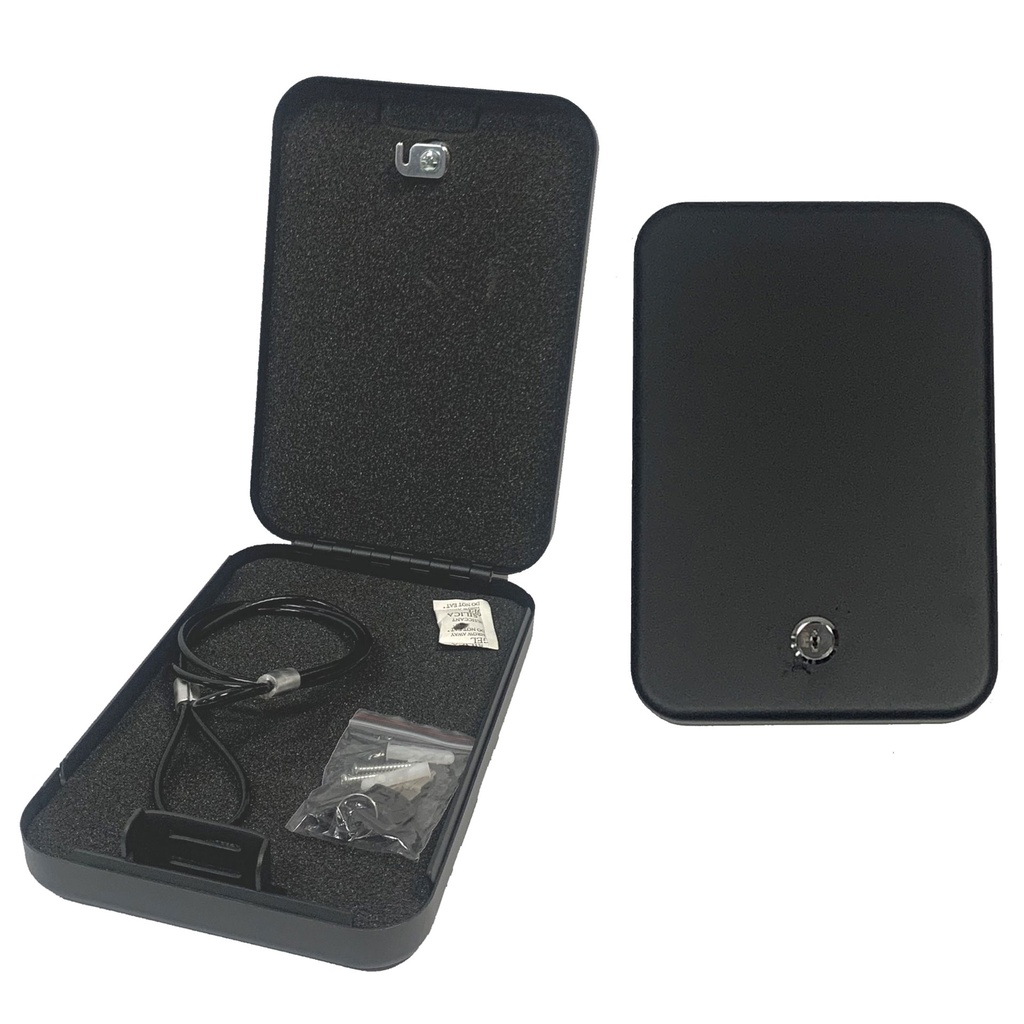
You don’t show this off. You just know exactly where it is. A discreet handgun lock box sits in your drawer or under your seat, cold-rolled black steel wrapped around foam that remembers your pistol’s shape. The cable tethers it quietly to your world, the key lives on your ring, and chaos stays on the other side of the lid. You’re the one who chose control instead of clutter—and everyone in your orbit feels that, even if they never see it.
You know the moment: you set your handgun down “just for a second.” On the counter. In the truck. On the nightstand. You tell yourself you’ll move it in a minute. Then someone knocks. A kid wanders in. You feel that flash of panic—your stomach drops—because you suddenly see what could happen if you keep trusting your memory more than your system.
That’s where a handgun lock box quietly changes the story. Not with drama. Not with a fingerprint scanner that belongs in a movie. Just a low, matte-black box that disappears into your life and keeps the people you care about safely on the other side of a lock.
How a Handgun Lock Box Turns "Where Did I Leave It?" Into "I Know Exactly Where It Is"
Owning a firearm isn’t about bravado for you; it’s about responsibility. Still, real life is messy. You get home late. You unload the console, shift bags around, answer a text. Your carry pistol ends up in that pile of “I’ll deal with it later.”
With a compact handgun lock box, there is no “later.” The box makes the decision for you. Drawer opens, lid pops up, foam-lined interior waits. Your pistol drops into the same place every time, nested in padding that protects the finish, the optics, the sights. Key turns, cable tethers it to the frame or seat rail, and you’ve just drawn a line between your weapon and the rest of your life.
This isn’t about locking things away from you; it’s about locking them away from chance. The keyed lock keeps curious hands out but keeps your access simple—you know exactly where the key is, and what it stands for: you’ve taken control of the story.
The Build Story: Why This Handgun Lock Box Vanishes Until You Need It
Look at this thing for a second. Cold-rolled steel, matte black, no screaming logos. Rounded corners that slide under a car seat or into a nightstand without catching. You don’t buy a handgun lock box because you want another object on display; you buy it because you want one less thing to worry about.
Cold-rolled black steel gives you that dense, serious feel in your hand—the unspoken promise that if someone tugs on it, pries at it, or tries to walk off with it, they’re not getting an easy win. The cable anchors to a solid point in your vehicle or furniture, so the whole box can’t simply disappear. That’s the part most people forget: an unlocked gun is a problem, but an unsecured safe can be its own risk. Anchoring solves that.
Inside, the foam lining is what you feel every time you open the lid. It cushions your handgun, absorbs the little knocks and bumps of daily movement, and keeps your sights, optics, and finish from taking damage in the name of safety. Protection from misuse shouldn’t mean punishment for your gear—this setup respects both.
The sound of done, not drama
There’s a specific sound when you shut a steel handgun lock box—soft foam, firm click, small turn of a key. No beeps. No lights. Just the quiet confirmation that you’ve closed the loop. You don’t need anyone else to hear it. You just need to know you did it.
Car, Drawer, Pack: Where Your Handgun Lock Box Lives in Real Life
In your vehicle, the story is simple: you pull into a place that doesn’t allow carry—school, courthouse, certain workplaces. Leaving a pistol loose in the glove box or console never really felt right to you. With a cable-anchored handgun lock box, you pop the lid, drop your firearm in, lock it, and walk away knowing that casual theft just got a whole lot harder.
At home, it becomes part of your evening ritual. Keys on the hook, wallet on the dresser, handgun into the box. Foam receives it; lid closes; lock turns. It tucks into a drawer so that visitors, contractors, and curious eyes don’t even register it. Security that doesn’t call attention to itself is the kind that actually gets used.
Travel days tell their own story. Heading out on a road trip, maybe crossing state lines where rules change, you thread the cable around a solid anchor point in the trunk or under a seat. The box rides with you. It’s not a display case. It’s not a range bag trophy. It’s quiet insurance that, if something goes sideways, your firearm isn’t the easiest thing a stranger can grab.
Comfort isn’t a holster; it’s a system
Carry all day if you like, but there are always moments when your handgun has to come off your body. Those in-between moments are where bad habits creep in—gun on the counter, gun on the floor, gun tucked under something “just for now.” A consistent handgun lock box in the same place every time removes the guesswork and the guilt.
When a Handgun Lock Box Makes the Difference Between "Responsible" and "Hopeful"
Plenty of people tell themselves they’re responsible gun owners. Fewer can point to the actual systems that prove it. A handgun lock box turns your good intentions into something physical: steel, foam, key, cable.
Think about the other options you’ve considered: a full-size safe (great, but not always near you), a quick-access electronic box (impressive until batteries die), or just shoving the pistol deep in a drawer and hoping nobody finds it. This compact, cable-anchored setup sits in the middle lane—small enough to live where you actually need it, solid enough to stand between your firearm and the wrong hands.
And there’s a more personal layer: when someone you care about asks, “Is your gun locked up?” you don’t have to bluff. You can answer calmly, because you’ve built a habit around that matte-black box. You’re not hoping. You know.
Questions People Ask Before Buying a Handgun Lock Box
Will this handgun lock box really keep my pistol secure in a vehicle?
It’s designed for exactly that kind of real-world use. The cold-rolled steel shell and included security cable let you anchor the handgun lock box to a fixed point under a seat or in a trunk, so a smash-and-grab thief can’t just grab the whole thing and walk. It won’t stop every tool and every minute of effort, but it shuts down opportunistic grabs fast.
Is a handgun lock box better than just using my glove compartment?
A glove compartment or console usually isn’t locked—or if it is, it’s thin plastic or light metal with a simple latch. A dedicated handgun lock box adds a real keyed lock, thicker steel, foam padding to protect your gun, and a cable anchor. That means more resistance, less rattle, and a lot more peace of mind than tossing your handgun in with registration papers and spare change.
How fast can I access my firearm from a handgun lock box?
Access speed comes down to one thing: knowing where your key is. With a keyed handgun lock box, there are no batteries or codes to forget—you insert the key, turn, and lift. If you build the habit of keeping the key exactly where you expect it, you get both security and predictable access without fiddling with electronics.
Will the foam interior fit my specific handgun and optics?
The foam lining isn’t cut for one exact model; it’s a forgiving, padded interior that cradles common handguns and compact pistols with or without smaller optics. Instead of a tight custom mold, you get a universal cushion that protects finish and sights from knocks while the lock box rides in a drawer, bag, or vehicle.
The Moment You Close the Lid: Who You Become With a Handgun Lock Box
Picture your next end-of-day routine. You come in tired. You peel off the day, one item at a time. When you reach for your handgun, you don’t wander the house looking for a “safe enough” spot. You open a matte-black handgun lock box, feel the give of the foam as you set the pistol down, and hear the clean click as you turn the key.
Nothing flashy. No ceremony. Just a quiet line you draw between readiness and recklessness. In that small movement—box, lid, lock—you’re no longer the person who hopes accidents won’t happen. You’re the one who already took them off the table.
That’s the real ownership here. Not just of a firearm, but of the responsibility that comes with it—and the calm that follows when you know you’ve handled it well.