Trackborn Twist Heritage-Forged Fixed Blade Knife - Carbon Steel
You don’t just carry a fixed blade knife; you carry a story. With this railroad spike in your hand, you feel the weight of forged carbon steel and the twist biting gently into your grip. The leather sheath rides on your belt like it’s always been there. Out in the yard, by the fire, or at your bench, this isn’t decoration. It’s that one honest edge that looks like history and works like today—quiet proof that you choose tools with character, not just convenience.
| Blade Length (inches) | 6.875 |
| Overall Length (inches) | 11.25 |
| Blade Color | Silver |
| Blade Finish | Satin |
| Blade Style | Clip Point |
| Blade Edge | Plain |
| Blade Material | Carbon Steel |
| Handle Finish | Forged |
| Handle Material | Steel |
| Theme | Railroad Spike |
| Handle Length (inches) | 4.375 |
| Tang Type | Full Tang |
| Pommel/Butt Cap | Railroad spike head |
| Carry Method | Belt |
| Sheath/Holster | Leather Sheath |
The first time you draw it from the leather, you notice the sound before the shine—a soft rasp of steel against sheath that feels older than you are. In your hand, the twisted handle of this fixed blade knife bites into your palm just enough to say, “I’m not here to be pretty. I’m here to work.” And yet, there’s no denying it: it looks like you pulled it out of an old rail yard instead of a box on your doorstep.
When a Fixed Blade Knife Feels Like Found History
You’ve handled plenty of modern knives—synthetic grips, coated blades, all function, no story. This one hits different. The moment you close your fingers around that forged railroad spike handle, you feel like you’ve rescued a piece of steel that used to hold the country together and given it a second life.
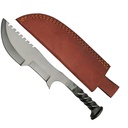
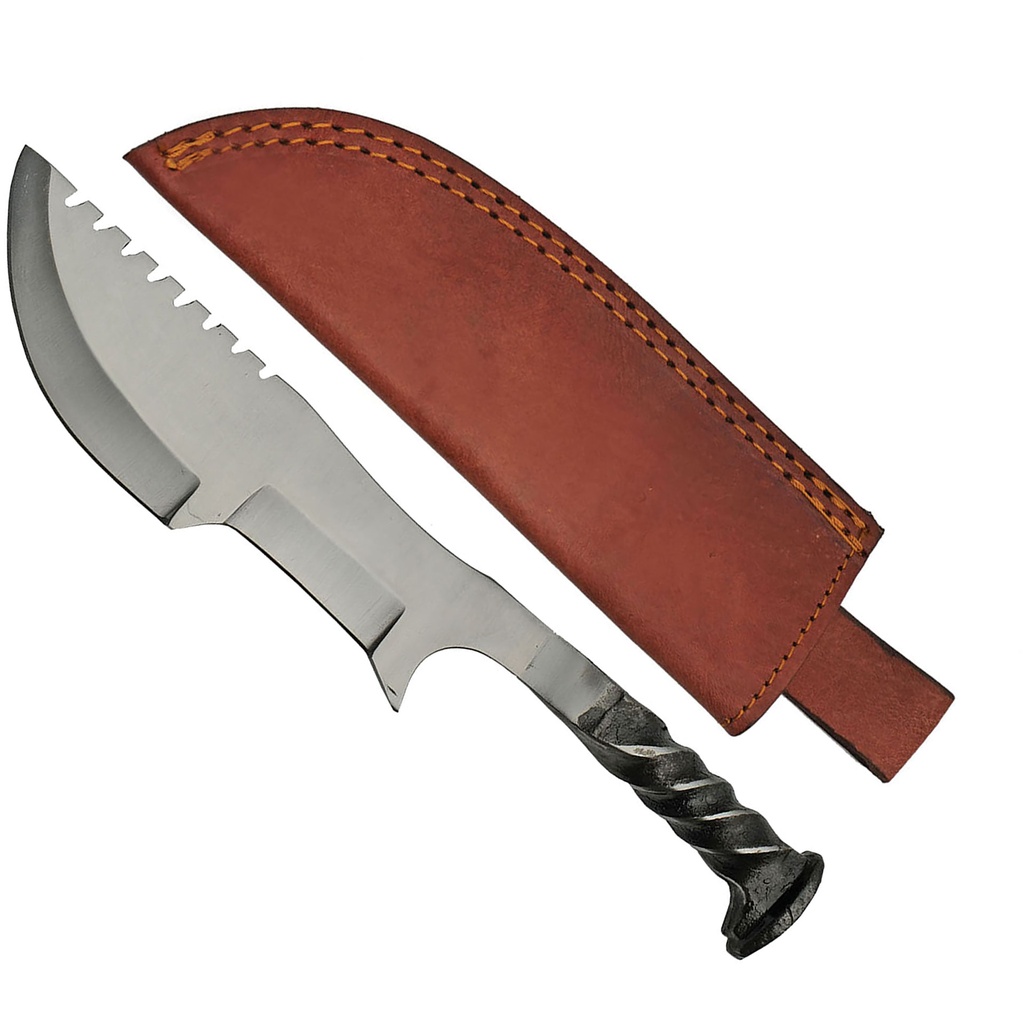
The clip point blade runs nearly seven inches in satin-finished carbon steel, clean and bright against the darker, raw-forged handle. It’s a full tang fixed blade knife, which means what you feel is one unbroken piece of steel from tip to spike-head pommel. On a gut level, that matters: no hidden joints, no mystery construction, just honest metal you can trust.
This is the knife you hang by the back door or slide onto your belt because you know it’ll handle the rough work without flinching—rope, cardboard, camp chores, that stubborn length of hose you’ve been meaning to cut down. Every time you reach for it, you’re not just grabbing a tool. You’re stepping into a role: the person who always has the right edge, and the story to go with it.
The Fixed Blade Knife Build That Backs Up the Story
Heritage looks mean nothing if the steel can’t pull its weight. Here, the design makes sense the second you really look at it. The carbon steel blade has a clip point profile—enough belly for slicing, a fine tip for detail work, and a straight section that bites into tougher cuts. Those small spine notches near the tip aren’t decoration; you feel them under your thumb when you choke forward for controlled pressure.
That full tang fixed blade knife construction is exposed on purpose, running straight into the forged twist of the handle. The twist isn’t a gimmick; it gives your fingers grooves to index against when your hands are wet, dirty, or gloved. The spike-head pommel at the end flares out, locking your hand in and giving you a solid stop so the knife feels planted, not slippery or top-heavy.
You notice the contrast every time you turn it in the light: satin blade, dark handle. It reads like a blacksmith’s handshake with a bladesmith—raw where you want grip and texture, refined where you want glide through material. The result is a working fixed blade knife that could live in a display and still not be too delicate to ride on your hip.
Carrying a Fixed Blade Knife That Actually Belongs on Your Belt
Plenty of fixed blades end up in drawers because they’re awkward to carry. This one comes with a brown leather belt sheath that doesn’t scream “tactical” and doesn’t feel like an afterthought. Slide it onto your belt and it rides close, the kind of daily carry blade you forget is there until you need it.
The leather has that warm, slightly stiff feel at first, then softens with use, shaping to the knife and to the way you move. The draw becomes a habit: thumb push on the guard, fingers curl around the twist, blade clears in one smooth motion. You’re not fumbling with snaps and nylon; you’re working with something that matches the knife’s story—traditional, straightforward, honest.
Out in the woods, it feels like a small camp knife you can trust for carving, food prep, or light batoning. Around the property, it’s the fixed blade knife you reach for instead of a box cutter because you know the balance, the reach, and the way it sits in your hand. It’s not dainty. It’s not oversized. It’s that sweet middle where you can actually live with it, not just look at it.
When a Heritage Fixed Blade Knife Changes How You Show Up
There’s a quiet shift that happens when someone notices it on your belt for the first time. They don’t ask what brand it is. They ask, “Is that a railroad spike?” And you get to tell the story—not of a logo, but of the idea: steel that used to hold tracks together, now holding an edge you can rely on.
You might carry modern EDC gear in your pockets—folders, multi-tools, lights—but this fixed blade knife becomes your statement piece. Not loud, not flashy, just different. It says you care about where things come from, how they’re made, and whether they’ll still make sense ten years from now.
This becomes the blade you pass to a friend when they need to cut something tougher than their keychain tool can handle. The one you use to shave kindling at a campsite, clean up a rough edge on a project, or slice open that heavy, taped-up crate. Every mark it picks up just deepens the story, the way a well-used hammer or axe tells on you—in a good way.
Questions People Ask Before Buying a Fixed Blade Knife Like This
Is a railroad spike style fixed blade knife actually good for real use?
Yes—what matters is the steel and construction, not just the shape. This one is a carbon steel fixed blade knife with full tang build, so you get real working strength and an edge that can be maintained, not just a novelty handle.
Can I carry this fixed blade knife every day, or is it just for display?
You can carry it daily if your environment and local laws allow it. The leather belt sheath makes it practical as an everyday carry blade around property, shop, or camp, while the size and design give it enough presence to display when it’s off your belt.
How does carbon steel hold up compared to stainless in a fixed blade knife?
Carbon steel tends to take a sharper edge more easily and feels great in a working fixed blade knife. You trade a bit of rust resistance for that performance, so wiping the blade down after use and occasionally oiling it keeps it looking and cutting the way you want.
Is the twisted handle comfortable for longer use?
The forged twist gives your fingers natural indexing points and grip, especially when your hands are wet or gloved. It’s not a soft rubber handle, but for a fixed blade knife meant to feel like heritage steel, it lands in that satisfying “solid tool” zone rather than “display-only” discomfort.
Later, when you hang up your jacket and empty your pockets, this is the one you lay gently on the counter instead of tossing with the rest. The satin carbon steel catches the last light in the room, the railroad spike head resting on wood like it’s been there for decades. Owning this fixed blade knife doesn’t turn you into someone else—it just reveals the part of you that always valued real steel, real work, and stories you can actually hold.