Trailborne Artisan Skinner Knife - Damascus Rosewood
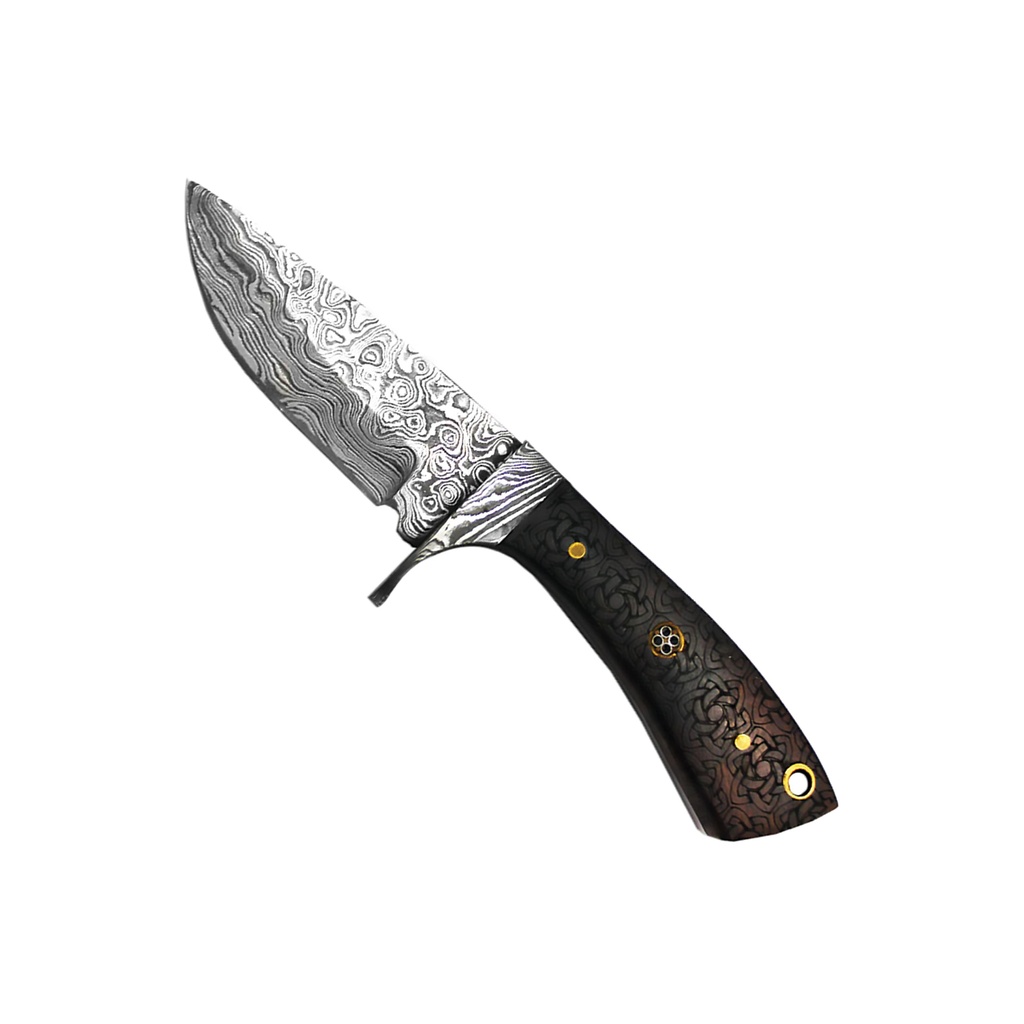
You’re down on one knee in the fading light, hands steady, breathing slow. This Damascus skinner knife feels like it grew out of the hunt itself—3.5 inches of full-tang, rippling steel locked into warm rosewood. The leather sheath creaks when you draw it, the edge tracks exactly where your eye goes, and suddenly the work is clean, controlled, almost quiet. This isn’t just a hunting knife—it’s the one you reach for without thinking.
| Blade Length (inches) | 3.5 |
| Overall Length (inches) | 6.5 |
| Weight (oz.) | 7.2 |
| Blade Color | Silver |
| Blade Finish | Damascus |
| Blade Style | Drop Point |
| Blade Edge | Plain |
| Blade Material | Damascus |
| Handle Finish | Etched |
| Handle Material | Rosewood |
| Theme | Damascus |
| Handle Length (inches) | 3 |
| Tang Type | Full |
| Carry Method | Belt Loop |
| Sheath/Holster | Leather Sheath |
You’re on the second animal of the season, the light’s dropping faster than you planned, and this is where you usually feel the nagging rush—hands slipping, cheap steel skating on tough hide, that quiet dread of making a mess you’ll have to live with later.
This time, you slide your thumb along warm rosewood, feel the full-tang spine of a compact Damascus skinner knife press steady into your palm, and the whole moment changes. The edge bites where you mean it to. The hide parts clean. You’re not fighting the knife; you’re guiding it. And you know, long before you’re done, that this one is staying on your belt for a very long time.
How a Damascus skinner knife changes the work in front of you
If you’ve ever dressed game with a dull or awkward blade, you remember the frustration more than the hunt. A Damascus skinner knife like this takes that memory and quietly replaces it with control. At 3.5 inches, the drop point blade is short enough to maneuver inside tight lines, but broad enough to ride the hide without digging. You feel the tip, not guess at it.
The full-tang construction runs solid from point to lanyard hole, which means when you twist your wrist or choke up for detail cuts, the knife doesn’t flex, complain, or surprise you. You’re using a small hunting knife that behaves like an extension of your hand, not a loose tool you’re trying to babysit.
The Damascus steel isn’t just there to look pretty in photos. Those rippling layers telegraph something you notice the first time you sharpen it: it takes an edge willingly and holds it through real work. You’re not stopping halfway through a deer to hunt for a stone. You finish the job, wipe the blade, and only then think about touching it up.
Why this Damascus hunting skinner feels handmade every time you grip it
You’ve probably handled knives that looked the part until you picked them up—and then the illusion broke. Too light, too slick, too generic. This Damascus skinner knife goes the opposite direction: the deeper you get into the details, the more it feels like someone built it with real field time in mind.
The etched rosewood handle scales are the first clue. They’re not flat slabs; they’re shaped to meet the curve of your fingers, with a warmth that only real wood gives. The etched pattern adds just enough texture that even with cold or wet hands, you feel anchored. The brass and mosaic pins aren’t there for show alone—they lock those scales to the tang in a way that feels permanent. When you squeeze down on a tough pull, nothing shifts.
At 6.5 inches overall and 7.2 ounces, this small hunting knife lands in that sweet spot between compact and substantial. It’s short enough to ride comfortably on your belt all day, but heavy enough that when you draw it from the leather sheath, your hand instantly finds its place without searching. That subtle finger guard, carved right into the tang, stops you before you ever slide forward on the edge—a detail you might not notice until the first slick, late-season job where you would have been at risk with a lesser blade.
Carrying a Damascus skinner knife that actually fits your day
There’s the knife you throw in a drawer and the knife you build habits around. This Damascus skinner knife wants to live in that second category. The leather sheath rides on your belt, not as a bulky statement, but as a quiet, ready presence. When you sit in the truck, walk a ridge, or crouch by the fire, it doesn’t poke, jab, or feel like gear you’re babysitting. It just waits.
On the trail, you reach for it without thinking—cutting cord, trimming a tag, breaking down kindling, doing the small camp chores that never make the story but shape the whole trip. In those moments, a small hunting knife that’s easy to draw and easy to re-sheath makes more difference than any spec sheet ever will.
Even back home, you may catch yourself reaching for it in the garage or yard, because the grip and balance have already become familiar. That’s how an everyday field companion is born: not from big claims, but from a dozen small jobs done well enough that you stop wondering if you brought the right blade.
When a small hunting knife earns a permanent place on your belt
You probably own more than one blade. But only a handful feel like part of your story. This Damascus skinner knife starts earning that spot the first time conditions aren’t perfect—rain starting up, fingers numb, light fading, maybe you’re tired from a long drag out.
In that moment, a small hunting knife with a broad, controlled drop point and honest weight gives you something you can trust: consistent cut lines, predictable bite, no drama. The Damascus steel glides through hide and tissue instead of tearing. The rosewood doesn’t chill your hand like bare metal. The full tang keeps your confidence level steady, even when you’re working faster than you’d like.
It’s also the kind of blade people notice without you ever bringing it up. Someone spots the patterned steel while you’re cleaning up at the tailgate, or they see the edge slide through a cut that gave them trouble last year. They ask, “What knife is that?” and all you have to say is, “Just my skinner,” because by then it already feels that familiar.
Questions people ask before buying a Damascus skinner knife
Is a small Damascus skinner knife big enough for deer and similar game?
Yes. A 3.5-inch Damascus skinner knife is actually right in the sweet spot for field dressing deer and similar-sized animals. You get enough blade to ride the hide and make long, clean draws, but the compact size gives you precise control inside tight areas where a longer hunting knife can feel clumsy.
Will a Damascus hunting skinner hold an edge with real field use?
Damascus is known for pairing toughness with strong edge performance, and this skinner is built for exactly that. Used as a dedicated small hunting knife—field dressing, light camp work, occasional utility cuts—you can expect it to stay sharp through the job and need only a quick touch-up rather than a full regrind.
Is this Damascus skinner knife practical for everyday carry, or only for hunting?
While it’s shaped as a hunting skinner, the size and full-tang build make it surprisingly useful as a compact fixed blade for daily outdoor carry. If your “everyday” includes ranch work, camping, or regular time in the field, this small hunting knife transitions easily into rope cutting, light carving, and camp tasks without feeling out of place.
How does a Damascus skinner knife compare to a standard stainless hunting knife?
A Damascus skinner knife gives you a different feel both in hand and on the stone. You’ll notice a more characterful bite in the cut and a more satisfying sharpening response. Stainless hunting knives can be lower maintenance in harsh, wet conditions, but many hunters prefer the blend of performance and personality that layered Damascus brings to a small hunting knife like this.
Picture the next time you pull an animal from the trees and lay it out on clean ground. You thumb the leather sheath, draw your Damascus skinner knife, and the handle settles into your palm like it’s been there for seasons. The first cut tracks exactly where you intend. The hide opens in smooth, obedient lines. There’s no rush, no wrestling—just you, your work, and a small hunting knife that finally matches the way you like to do things. By the time you wipe the last trace from the patterned steel, you’re not wondering if you chose well. You’re already thinking about the stories this blade will quietly carry, ride after ride, season after season.