

Armorer’s Bench Rifle Doctrine Manual - White Cover
You’ve stripped your rifle on the bench a hundred times, but this rifle doctrine manual lets you see it the way a Marine armorer does. Clear black‑on‑white diagrams, real USMC procedures, and no fluff—just what to do, when, and why. Pages lie flat, oil smudges become notes of work done, and you stop guessing at “good enough.” With this rifle manual, you don’t just own a rifle—you understand it.
You’re at the bench, bolt carrier in one hand, a half-remembered YouTube tip in the other. The rifle runs… most of the time. But every now and then, a weird malfunction shows up and you catch yourself thinking, “If this were a real moment, not just range day, would I actually trust this?” That’s the gap this rifle doctrine manual quietly closes.
When a Rifle Manual Becomes Your Quiet Advantage
This isn’t some glossy coffee-table book you flip through once. This is a rifle manual written the way Marines learn: direct, repeatable, and unapologetically practical. Every diagram, line, and note exists to answer one simple question for you: “What exactly should I do to keep this rifle running?”
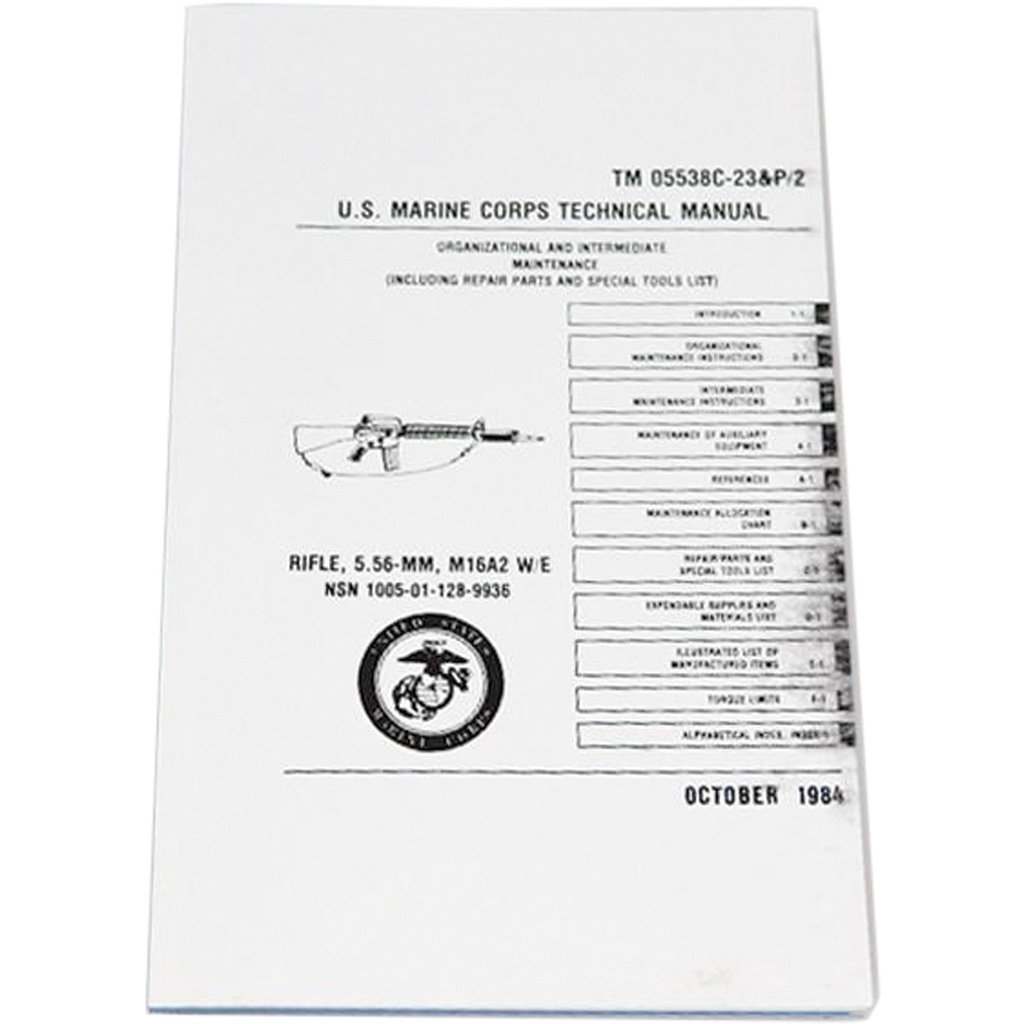
The white cover looks almost plain at first glance—just black text, the Eagle, Globe, and Anchor, and a clean line drawing of the M16A2. But that’s the tell. It looks like what it is: an authentic-style USMC technical manual, the kind of book that lives in armories, not on Instagram. When you open it, you’re stepping into a doctrine that has kept rifles alive through mud, sand, salt air, and long, sleepless nights.
Out of all the information you’ve skimmed online, almost none of it gives you this feeling: certainty. This rifle manual does, because it doesn’t care about being entertaining. It cares about getting the job done, the same way you do.
Rifle Manual Design That Treats You Like the Armorer
What makes this different is how clearly it’s designed around use, not looks. The pages are black-and-white for a reason: your eyes find contrast fast, even under lousy lighting. The diagrams are line-art, not artsy renders, so you can actually trace pins, springs, and components with your fingertip and match them to what’s in front of you.
The tabbed sections printed along the cover edge hint at the organization inside. When you’re halfway through a cleaning and want to double-check a torque value, a reassembly order, or a troubleshooting flow, you don’t flip at random—you go straight to the right section. That’s what someone who’s been there built into this book.
The soft, perfect-bound white cover has its own function: it takes pencil notes, oil smears, and fingerprints like a working document, not a collectible. Over time, your copy of this rifle manual becomes a history of every problem you solved and every small improvement you chose not to leave to chance.
The feel of real doctrine in your hands
When you spread it open on the bench, it lies flat enough to stay where you leave it. The matte finish cuts glare, so your flashlight or overhead LEDs don’t turn the page into a mirror. You’re not babysitting a book—you’re working with it.
How This Rifle Manual Fits Into Your Real Life
You don’t need another thing to carry “just because.” You bring gear that earns its place. This rifle manual earns it by becoming the quiet reference you reach for in moments when guessing would feel reckless.
At the range, it’s your answer key when a malfunction keeps repeating and everyone else is swapping parts at random. Instead of throwing money at mystery problems, you walk through the maintenance and troubleshooting doctrine step by step. You see where carbon builds, where wear should and shouldn’t appear, and what “within spec” actually looks like.
At home, it’s how you finally explain to a new shooter why you do things a certain way. Instead of saying, “I saw this online,” you can point to diagrams, procedures, and notes that come from actual Marine Corps-style maintenance. You’re not copying influencers—you’re channeling an armorer’s mindset.
The small rituals this rifle manual changes
You’ll notice your cleaning sessions get quieter. Less fumbling, more flow. Parts go back in the same order, every time. Springs face the right direction, every time. You stop second-guessing whether you “missed something,” because if it matters, this book has it laid out for you in black and white.
When a Rifle Manual Beats Another Search Result
There’s a moment everyone hits: a rifle problem that doesn’t match the quick-fix videos. Maybe it’s a subtle feed issue, a stubborn extraction problem, or a pattern of malfunctions that only show up after a few hundred rounds. That’s where a real rifle manual quietly proves its value.
Instead of scrubbing through a 14-minute video for one sentence, you walk through a structured sequence: symptoms, likely causes, specific checks, and precise steps. It’s not guesswork—it’s doctrine, distilled from people whose lives depended on their rifles not being temperamental.
If you’ve ever wondered which is better—another accessory or deeper understanding—this book gently answers that, too. Accessories can be nice. But this kind of technical understanding gives you something gear can’t: confidence. You’ll feel it the first time you fix an issue methodically instead of accidentally.
Questions People Ask Before Buying a Rifle Manual
“Is a rifle manual like this actually useful if I’m not military?”
Yes, because rifles don’t care about your background—they care about correct maintenance. This rifle manual uses Marine-style clarity, but you don’t need a uniform to follow it. If you can field strip a rifle, you can use this book to do it better, with more intention and fewer unknowns.
“I already watch videos—why would I need a rifle manual?”
Videos are great until you need a specific torque value, a tiny part orientation, or a detailed diagram right now. A good rifle manual gives you exact, repeatable reference in seconds, even with dirty hands and no signal. It doesn’t replace videos; it makes sure everything they skipped is still covered.
“Will this rifle manual help me keep my rifle reliable long-term?”
That’s exactly what it’s built for. Instead of vague “clean it sometimes” advice, it walks you through specific inspections, wear points, and maintenance intervals. Over time, that means fewer surprises, fewer mysterious failures, and a rifle you trust because you’ve done more than the bare minimum.
“Is a manual like this overkill for a casual shooter?”
Only if caring about your gear is overkill. Even if you shoot a few times a year, a clear rifle manual lets you bring that rifle out of the safe knowing you didn’t cut corners. It’s less about volume of rounds and more about the kind of relationship you want with the tool in your hands.
The Moment You Become the Person Who Knows
Picture the next time someone hands you a rifle with a problem they can’t quite name. Instead of shrugging or guessing, you feel that quiet click of confidence. You’ve seen this before—maybe not this exact issue, but the pattern. You flip open a worn, oil-marked rifle manual, trace a diagram with your thumb, and walk through the fix like it’s a routine, not a gamble.
That’s who this book turns you into over time: the person who knows, not just the person who owns. The white cover picks up the story of every bench session and range day you put in. And somewhere along the way, you stop thinking of it as “a manual” and start thinking of it as part of how you carry yourself around your rifle—steady, prepared, and absolutely done with guessing.