Battle-Tested Army Survival Field Manual - Signal Yellow
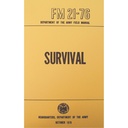
You’re not looking for campfire trivia. You’re the one people turn to when things go sideways, and a real survival manual is part of how you stay ready. This battle-tested Army survival field manual speaks in clear, do-this-next steps: find water, build fire, stay fed, get found. The signal yellow cover jumps out of your pack when adrenaline is high and time is short. You’re not collecting books—you’re building a kit that actually gets you home.
You don’t buy survival gear for the days when everything goes right. You buy it for that moment when the trail disappears in the dark, your phone dies, and everyone quietly turns to you. In that space between calm and panic, you don’t want theory. You want a survival manual that tells you, in plain language, what to do next.
When a Survival Manual Becomes Your Backup Brain
This is where a survival manual either earns its space in your pack or becomes dead weight. When weather shifts fast, or a wrong turn becomes an overnight problem, you need something you can flip open and trust—no fluff, no campfire storytelling, just clear, field-tested instructions.
The FM 21-76 content inside this reprint was written for soldiers expected to survive in hostile terrain and still complete the mission. Translated into your world, that means you get step-by-step guidance on finding water when the creek on the map is bone dry, building a fire when everything is wet, navigating when landmarks vanish, and staying fed when the snacks are gone and you’re still miles from anywhere.
Owning this survival manual means you stop hoping you’ll remember everything you saw on YouTube and start carrying a backup brain—one that was built for high-stress, real-world conditions.
Why This Survival Manual Feels Different the First Time You Open It
If you’ve paged through glossy “ultimate survival guides,” you already know how fast pretty layouts fall apart when you’re cold, tired, and trying to think clearly. This survival manual comes from the opposite direction: block text, simple diagrams, Army-style organization. It reads like someone who has been there and is too tired to sugarcoat anything.
As you move through sections on navigation, water, food, and firemaking, you notice the tone first: direct, almost blunt. There’s no “maybe try this” or “fun fact” padding. Just: here’s what works, here’s how to do it, here’s what happens if you don’t. That’s the design story here—the minimal cover and official typography aren’t trying to impress you; they’re signaling that this was written to keep people alive, not entertained.
You’ll find guidance on survival in special areas—desert, jungle, cold weather—that feels like someone quietly handing you the cheat codes: what to prioritize, what actually kills people first, what beginners always underestimate. You’re not getting a personality brand or social media voice; you’re getting doctrine refined by years of hard lessons.
The Signal Yellow Choice You’ll Be Grateful For
The color seems loud at first—until you imagine your ruck dumped out in the dusk, gear scattered, hands shaking. That signal yellow jumps out of the chaos. In an emergency kit under the back seat, in a bug-out bag, on a basement shelf during a power outage, your eye goes straight to it. That’s not aesthetics; that’s design as a survival feature.
Carrying a Survival Manual as Quiet Confidence, Not Paranoia
There’s a subtle shift that happens when you add a serious survival manual like this to your everyday readiness. You’re not suddenly expecting disaster—you’re just quietly removing the fear of "what if I don’t know what to do?"
On a routine hike, it lives in your pack next to your first aid kit. You might not open it for months, but knowing it’s there changes how you move through the woods. You’re more willing to explore a side trail, stay out a little longer, or mentor a newer hiker, because in the back of your mind you know: if something unexpected happens, you have a structured, military-grade reference sitting a zipper away.
At home, it slides onto a shelf near your flashlights, batteries, and water storage. During a storm, when the power cuts and the house goes quiet, you’re not scrolling frantically through weak cell signal for "how to purify water" or "how to stay warm without power." You grab the same bright yellow cover you already know by touch.
How It Fits Into a Real-World Kit
This isn’t a coffee-table book you baby. You toss it into a pack, slam it into a glovebox, wedge it under elastic in a go-bag. The matte signal yellow cover shrugs off scuffs and keeps shouting its location. Inside, the black-on-yellow contrast stays readable under headlamp or flashlight glare, and the simple layout means you’re rarely more than a few page turns from the section you need.
It becomes part of a system: multitool, fire starter, compact shelter, water filter—and this survival manual tying it together with the know-how that makes those tools matter.
When a Military Survival Manual Beats Civilian Advice
You’ve probably wondered at some point whether you really need a military-style survival manual, or if a civilian guide or random online articles are enough. That doubt is healthy; it means you’re not just collecting gear for the look of it.
The difference here is mindset. Civilian guides often assume you’re lost but basically safe. FM 21-76 assumes you’re in real trouble: unfamiliar terrain, limited supplies, maybe injured, maybe being actively hunted or tracked. From that assumption, the manual ruthlessly prioritizes what truly matters: core body temperature, water, shelter, fire, food, movement, and signaling.
So when the question is "which guide do I trust when I’m exhausted and scared?" the Army’s answer is organized right here. Step-by-step firemaking techniques. Water-finding methods that don’t require specialty gear. Navigation tricks that work even when the sky is cloudy and the compass is gone. It’s not about playing soldier; it’s about borrowing the best thinking from people who don’t have the luxury of guessing.
Questions People Ask Before Buying a Survival Manual
Is a military survival manual like this actually useful for civilians?
Yes—maybe more useful than most civilian books. The core needs in a survival situation don’t change just because you’re not in uniform. This survival manual focuses on universal tasks like finding water, building shelter, and navigation. You simply adapt the mindset and techniques to your hikes, road trips, or emergency planning at home.
Is this survival manual too technical if I’m just starting out?
It’s straightforward, not academic. The language is direct and practical, because it was written for soldiers who needed to act, not debate. If you can follow basic instructions, you can use this survival manual. Many people actually use it as a foundation, then layer in civilian skills or local knowledge on top.
How does this compare to watching survival videos online?
Videos are great for learning when you’re comfortable at home, but they disappear when your battery dies or reception drops. A physical survival manual rides with you wherever you go and doesn’t care if your phone is at 2%. It also gives you a structured, complete overview instead of scattered tips, which matters when you’re stressed and trying to think clearly.
Will this survival manual cover the kind of terrain I’m in?
Probably. FM 21-76 was written to cover a wide range of environments—woodland, desert, jungle, cold weather, and more. You’ll find guidance for navigation, food, water, and shelter in multiple conditions, plus survival in special areas. It won’t name your favorite trail, but it will give you principles that travel well.
At some point, you’re going to zip up a pack, lock a door behind you, or sit down after a storm and do a quiet inventory of what you actually trust. In that moment, this survival manual stops being "just a book" and becomes something else entirely: a decision you made, in advance, to not leave your safety to luck or half-remembered tips. The signal yellow cover will be there when your hands aren’t steady, the pages will walk you through the next step, and you’ll feel that calm click in—the calm of someone who came prepared on purpose.