Barracks Lifesaver Field-Ready First Aid Manual - Yellow Cover
You don’t reach for this military first aid manual because it looks cool. You reach for it when someone you care about is bleeding, shaking, or not breathing right—and you refuse to just stand there. This field-ready first aid manual rides in your kit, glove box, or range bag, its yellow cover easy to spot when your hands are already shaking. You flip it open and the Army-trained voice on the page walks you through what to do, step by step. Calm replaces panic. And that’s who you become: the person who actually knows what to do.
Your buddy goes down fast. One second you’re joking, the next there’s blood on his shirt and everyone’s eyes snap to you. Nobody says it out loud, but the question hangs there: “What do we do?” In that thin slice of time between panic and action, you either freeze—or your hand already knows where the bright yellow first aid manual is.
This isn’t theory. This is the moment this military first aid manual exists for.
When a Military First Aid Manual Turns You From Bystander to First Responder
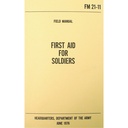
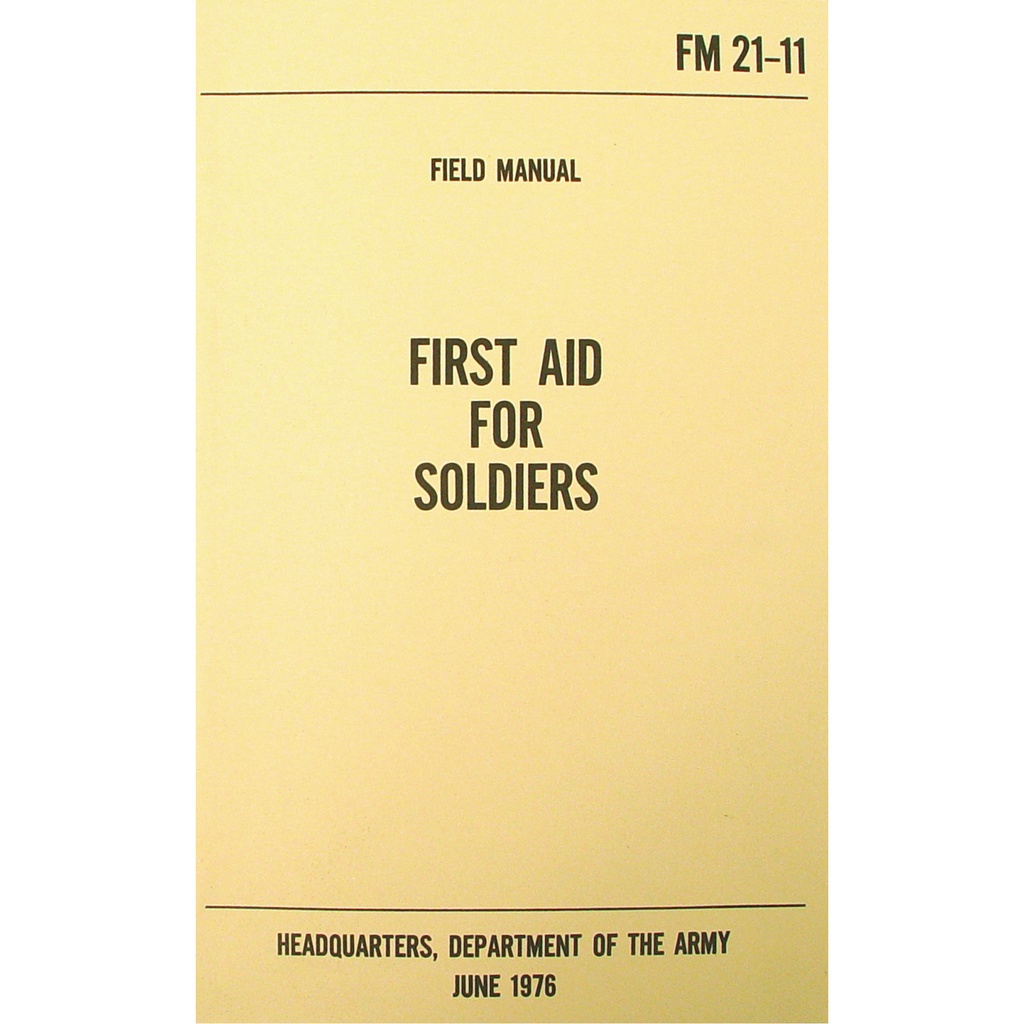
You’ve probably scrolled past a hundred "emergency" books that feel more like disaster porn than help. A real military first aid manual hits differently. It was built for barracks, bivouacs, and bad days, not coffee tables. This reprint of the U.S. Army’s 1976 “First Aid for Soldiers” field manual speaks to you like a seasoned NCO: simple, direct, no hand-holding, no fluff.
Bleeding? It walks you through exactly where your hands go, how hard to press, what to watch for. Burns? It doesn’t waste a paragraph on drama; it gives you clear, ordered actions. Shock, fractures, bites, breathing problems—it’s all there in plain language that could cut through adrenaline when your heart is pounding in your ears.
Owning a military first aid manual like this changes something quiet in the back of your mind. You stop hoping someone else will know what to do. You start realizing that someone might be you.
Why This Military First Aid Manual Earns a Spot in Your Kit
Most books are designed to be admired. This one is designed to be abused. The softcover fits where your life already happens: glove box, range bag, truck door, go-bag, bedside drawer, barracks footlocker. The yellow cover isn’t a style choice; it’s a visibility choice. In bad light, in chaos, in the clutter of everything else you carry, your eyes find yellow first.
Because this is an official reprint of the U.S. Army FM 21-11 “First Aid for Soldiers,” you’re not getting some blogger’s opinion of first aid. You’re getting doctrine written for people who couldn’t afford to get it wrong. Every section is built like a field briefing: what’s happening, why it’s dangerous, what you do right now. You don’t have to speak the language of medicine; you just have to be willing to follow clear steps under stress.
If you’ve ever thought, "I should really learn how to handle an emergency," this military first aid manual is the honest bridge between that thought and actually being ready. It doesn’t just sit there. It invites you to crack it open on a quiet night and run your eyes over scenarios you hope never happen—but know probably will.
Carrying a Military First Aid Manual in Real Life: How It Actually Fits In
Preparedness doesn’t live on a shelf. It lives in the small, unglamorous decisions you make about what you carry and where you stash it. This military first aid manual slides into places you already reach for under pressure: next to your registration in the car, in the side pocket of your range bag, in the lid of your ammo can, or tucked behind the med kit on your gear shelf.
It’s slim enough that grabbing it doesn’t feel like a production. You can toss it into a daypack for a hike, drop it into a dorm drawer, or keep it in the kitchen where most household chaos seems to happen. It becomes part of your everyday landscape, not some special-occasion survival trophy.
The feel of something trustworthy in your hands
There’s a particular kind of calm that comes from flipping through an official military field manual. The all-caps black text on that solid yellow cover, the FM 21-11 designation, the Department of the Army imprint at the bottom—they all quietly tell you: people’s lives depended on this. As you work through the pages, you start mapping your own spaces: "If something happens in the garage, this is where the manual is. If it happens on the road, it’s right there in the glove box." The paper, the weight, the deliberate layout—none of it is fancy. All of it is focused.
From casual read to muscle memory
The first time you read through a scenario—say, controlling severe bleeding—it’s just words. The second time, your brain starts building pictures: where you’d kneel, what you’d use for pressure, what you’d say to keep someone awake. By the third pass, the steps from this military first aid manual feel less like instructions and more like a plan you already own.
When a Military First Aid Manual Makes the Difference Between “I Froze” and “I Helped”
Think about where things actually go sideways in your world. Maybe it’s not some apocalypse. Maybe it’s a training weekend where someone takes a bad fall. A camping trip where a kid slices a finger with a hatchet. A highway shoulder where brake lights and hazard flashers turn the night into a blur of red. In those real, messy moments, your phone might be dead, out of service, or just too clumsy to search with shaking hands.
This is where a military first aid manual earns its keep. No passwords, no loading screens—just pages that open exactly where you left the last dog-ear. You’re not arguing with a dozen conflicting internet opinions. You’re following a single, authoritative voice that was written for people whose job was staying calm in chaos.
You don’t need to be a medic, a soldier, or a survivalist. You just need to be someone who refuses to be useless when someone else is scared and bleeding. That decision, more than any gadget, is what makes this manual worth carrying.
Questions People Ask Before Buying a Military First Aid Manual
Is a military first aid manual still useful if it’s from 1976?
Yes. The basics of bleeding control, shock management, burns, fractures, and airway support haven’t changed. This military first aid manual focuses on timeless, practical steps anyone can follow without special equipment. You’re not learning hospital protocols—you’re learning how to keep someone alive until help arrives.
Should I get a military first aid manual if I already have a med kit?
A med kit gives you tools; a military first aid manual tells you what to do with them. Gear without knowledge is just expensive clutter. Keeping this manual with your kit means you’re not relying on memory when adrenaline wipes your brain clean—you’ve got clear instructions you can follow in the moment.
Is this military first aid manual good for everyday situations, or just tactical stuff?
Most emergencies don’t look tactical—they look ordinary and ugly. Falls, cuts, burns, shock, bites, blocked airways—this manual covers the same problems that show up in homes, cars, and campgrounds. The military context simply means the information is direct, field-tested, and written for people under stress.
Can someone with zero medical background actually use this?
That’s who it’s written for. A military first aid manual like this assumes you’re scared, rushed, and not medically trained. The instructions are broken into clear actions you can follow step by step, even if all you remember at first is, “Grab the yellow book and open to the section on bleeding.”
Owning a Military First Aid Manual and Knowing You Won’t Look Away
Picture one more scene. It’s late. The world has quieted down. You’re sitting at the table or on the edge of your bed with this yellow-covered military first aid manual in your hands. You flip through choking, burns, bleeding, shock. None of it is glamorous. All of it is real. Somewhere between one section and the next, you feel it—the quiet shift from "I hope nothing happens" to "If something does, I won’t be useless."
The manual closes with a soft slap, and you slide it into its new home—glove box, range bag, go-bag, nightstand. You don’t announce it to the world. You just carry on with your life, knowing that if the worst fifteen seconds of someone else’s day crash into you, you’ll have more than good intentions. You’ll have a military first aid manual written to guide ordinary people through extraordinary moments—and you’ll be the one who reaches for it.