Covert Field Manual Incendiary Tactics Handbook - Black Cover
You don’t pick up an incendiary tactics handbook by accident. You reach for it when curiosity stops being casual and turns into study. This covert field manual–style book feels like something pulled from a locked footlocker: black cover, SPECIAL FORCES banner, diagrams packed into 155 pages. You turn the pages slowly, feeling the weight of knowledge, not hype. Owning this isn’t about showing off—it’s about understanding the kind of information most people will never see.
You don’t find a book like this while you’re killing time. You go looking for it on purpose. Maybe you’ve seen references to old military manuals, maybe you’ve wondered how much of that talk about incendiary devices, napalm mixes, or fuse cord is myth and how much is real. Then one day you’re holding this black, no-nonsense paperback that looks like it was pulled out of a government footlocker, and you feel it: this isn’t entertainment. This is a manual.
When an Incendiary Tactics Handbook Becomes a Turning Point
There’s a specific moment when an incendiary tactics handbook stops being just a provocative title and becomes a line you consciously choose to cross. You crack the black cover, see that SPECIAL FORCES banner, and realize you’re stepping into the kind of dense, technical world most people never touch. You’re not skimming a blog post anymore; you’re reading the sort of material that once lived far away from casual eyes.
Inside, you find chapters laid out like a field text: incendiary systems, tools and techniques, initiators, fuse cord, improvised string fuse. You’re introduced to sugar–chlorate mixtures, fire fudge subigniters for thermite, and more of the gritty, unromantic details that sit behind the word “incendiary.” You start to see that the myth of fire is all drama—but the truth of fire is measurement, timing, ratios, and respect.
Why This Incendiary Tactics Handbook Feels So Uncomfortably Real
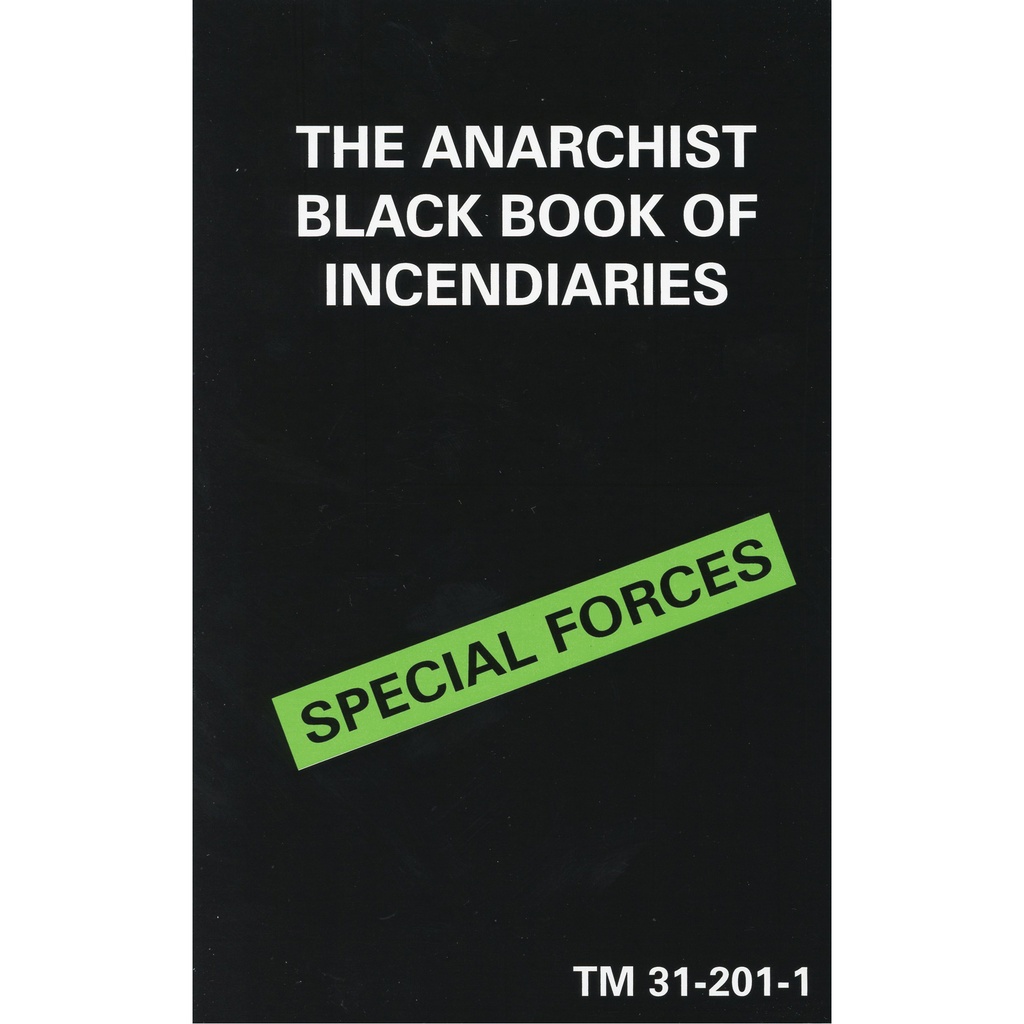
Part of what hits you is how ordinary the book looks in your hand: about 5.5 by 8.5 inches, 155 pages, paperback. It feels like a standard field manual—small enough to carry, serious enough to demand space in your bag or on your shelf. The design is stripped-down black with bold white type and that bright green diagonal banner that shouts SPECIAL FORCES, like you’re holding a photocopied fragment of some training pipeline you were never meant to see.
As you move through diagrams and illustrations, the style reinforces it: not pretty, not ornamental, just functional sketches and labeled systems. You can almost imagine this incendiary tactics handbook tumbling out of a duffel on some forgotten base, corners bent, margins filled with tiny notes. That’s the feeling you get—even brand new, it reads like something that has lived a harder life somewhere else.
Living With a Book That Doesn’t Look Away From Incendiaries
There’s a difference between reading about fire in a novel and sitting with 155 pages focused on how to deliberately create, shape, and sustain it. This isn’t a light afternoon distraction. When you keep this incendiary tactics handbook on your desk or shelf, you’re making a quiet statement about the kind of knowledge you’re willing to confront.
Most people never ask how napalm is improvised from mundane materials, or how paraffin and sawdust can be blended for slow, stubborn burn. You turn the page and start understanding what a fuse really is, beyond a movie prop: timing, burn rate, reliability. You see how an improvised string fuse works, what an initiator actually does in a system, how a subigniter brings thermite to life.
The more you read, the more you realize the real lesson here isn’t “how to make something dangerous.” It’s how much hidden complexity sits underneath anything the world calls simple. Fire ceases to be a background element and becomes a studied phenomenon. You’re not playing with ideas—you’re studying them, fully aware of the weight of that choice.
How a Covert Incendiary Handbook Changes the Way You See Knowledge
If you’re honest with yourself, part of the draw of an incendiary tactics handbook is the feeling of accessing restricted knowledge. The cover looks like a government technical manual, the code TM 31-201-1 in the corner adds that coded, classified vibe. But what keeps you reading isn’t the transgressive thrill—it’s the realization that this is how professionals document reality: clearly, clinically, without drama.
You begin to notice how you respond to that tone. You read a section on fire bottles, the bland term for something with serious history behind it, and you catch yourself slowing down, rereading a paragraph, tracing an illustration with your finger. You’re not the kind of person who’s satisfied with vague summaries anymore. You want to know how things are actually constructed, layer by layer.
Owning this incendiary tactics handbook becomes less about the book and more about who you are when you choose to keep it. You’re someone who doesn’t flinch from technical detail. Someone who can handle complexity without needing it watered down. Someone who understands that information itself is neutral—but your responsibility to it isn’t.
When an Incendiary Tactics Handbook Is the Right Kind of Dangerous
There are lots of ways to flirt with danger: movies, forums, half-baked how-tos. But sitting down with a focused incendiary tactics handbook is different. It forces you to confront intent. Why are you reading? Curiosity? Historical interest? A desire to understand how militaries and specialized units think about fire as a tool rather than a fear?
In a world of quick takes and dramatized clips, there’s something unsettling—and strangely grounding—about turning paper pages filled with line drawings and specific, technical language. You see terms like fire fudge subigniter, improvised napalm, thermite, and you realize there are whole categories of knowledge that exist in parallel to the comfortable, everyday world most people inhabit.
That’s the quiet shift this book triggers: not recklessness, but awareness. You’re suddenly more conscious of what’s behind every headline that mentions incendiaries, every reference to “devices” or “materials.” You understand that somewhere, someone had to write a manual first. Now you’re reading one.
Questions People Ask Before Buying an Incendiary Tactics Handbook
“Is it actually technical, or just edgy language and stories?”
This reads like a real technical incendiary tactics handbook, not a dramatized paperback. The chapters walk through incendiary systems, devices, materials like napalm and thermite, and various initiators and fuses with diagrams and clear explanations. It feels closer to a field manual than a thriller.
“Will I be able to understand the diagrams and instructions?”
If you’re patient and detail-oriented, yes. The illustrations are straightforward and the language is more practical than academic. Think military-training style: short sections, labeled sketches, and focused descriptions that assume you’re serious enough to follow along, not an expert walking in.
“Is it uncomfortable to own something this focused on incendiaries?”
It can be, and that’s part of the point. Keeping an incendiary tactics handbook on your shelf is a conscious choice. It’s suited to people who accept that technical knowledge can be heavy and who are committed to treating that information with respect rather than thrill-seeking.
“Does it cover just one type of incendiary, or a range of methods?”
It spans a range: from fuse cord and improvised string fuses to sugar–chlorate mixes, thermite subigniters, improvised napalm blends, paraffin and sawdust compositions, and fire bottles. You see how different materials and techniques interlock into usable incendiary systems.
At some point, you close the back cover and just sit there with it in your hand. The black matte surface absorbs the light; the SPECIAL FORCES slash of green cuts across your vision. You’re not thinking about "owning a book" anymore—you’re thinking about the line between curiosity and understanding, and how you’ve deliberately stepped over it. This incendiary tactics handbook becomes a quiet marker in your life: a reminder that you’re the kind of person who doesn’t just hear the word “incendiary” and move on. You look it in the eye, study it, and carry the weight of knowing more than you did yesterday.