Fieldgrade March Tactical Lensatic Compass - Military Green
You’re off the trail now—the map’s in your hand, the light’s dropping, and your phone is a dead brick. This is where a real lensatic compass matters. Metal, not plastic. A clicking bezel you feel through gloves. You sight the wire, read your bearing, and suddenly the ridgeline ahead isn’t a question mark—it’s a route you own. This tactical lensatic compass doesn’t make the decision for you. It gives you the confidence to make it fast.
You don’t realize how loud the backcountry really is until you stop hearing other people. No trail markers. No cell signal. Just wind over the ridge, tree line fading behind you, and a map that suddenly feels more like a test than a guide. This is the moment you find out whether that tactical lensatic compass in your hand is a toy—or the reason you walk out before dark.
When a Tactical Lensatic Compass Turns Terrain Into a Plan
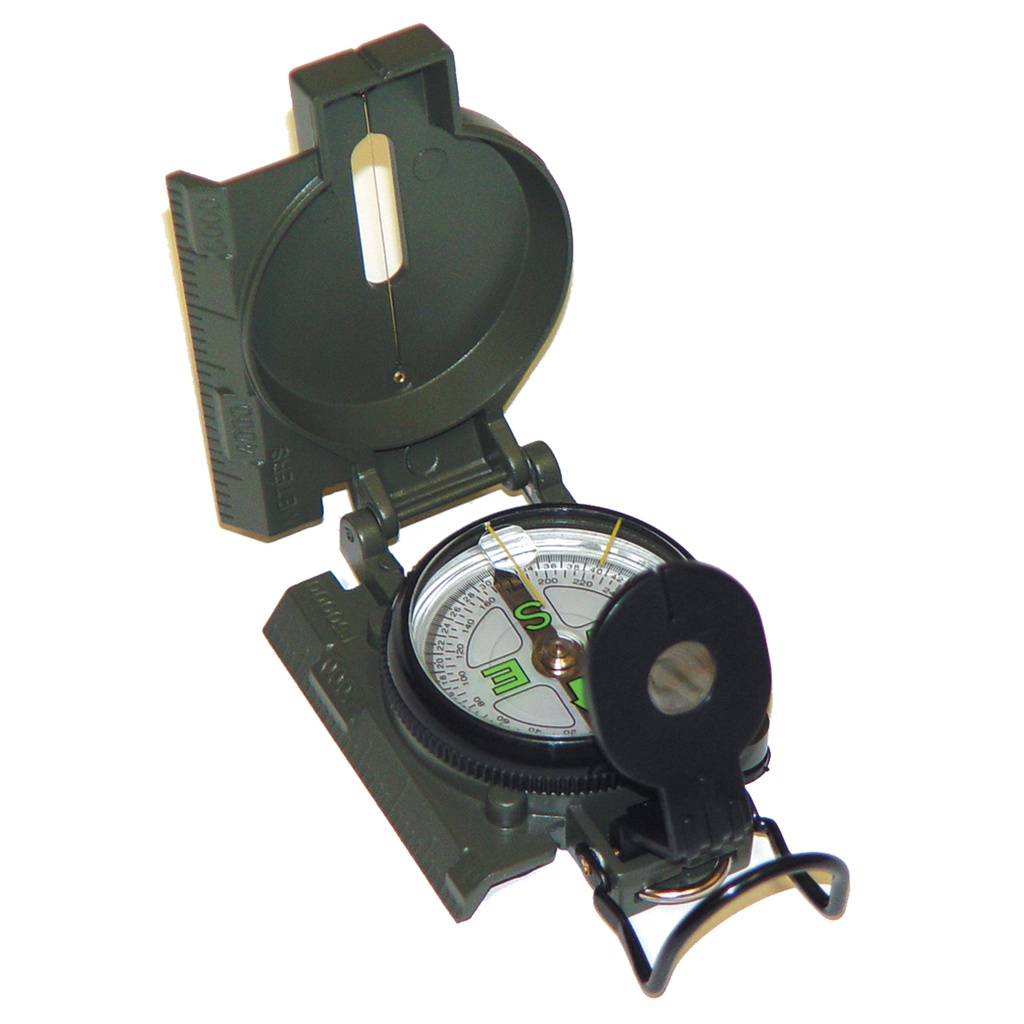
Out here, guesswork looks harmless right up until the light drops. With a real tactical lensatic compass, you don’t “kind of” head in the right direction—you lock in a bearing. You flip the metal lid open, the sighting wire lines up with that distant notch in the ridge, and you read the dial through the raised lens without shifting your stance. You feel the bezel click under your thumb as you set your azimuth, each notch a small, solid decision.
This design clicked the first time you notice how everything serves that one moment: sight, read, move. The 2-inch dial isn’t oversized; it’s big enough to see degrees clearly without hunting for them. The lens sits high enough that you can keep the compass level and your eyes on the horizon. Nothing flashy. Just details that make your hands faster and your choices calmer.
Why Metal Matters in a Tactical Lensatic Compass
You’ve owned the cheap ones. Plastic cases that flex when you squeeze them, lids that feel like a toy car door. You don’t think about that until the first time you drop it on rock and the hinge doesn’t sound right afterward. With this tactical lensatic compass, the first thing you notice is weight—just enough metal in the case and lid to feel serious in your palm, even with gloves on.
The military green housing isn’t about style; it’s the same muted tone you see on gear that’s meant to disappear into your kit, not shout from it. The matte finish keeps reflections down when you’re sighting across open ground, and the metal body shrugs off the kind of knocks that happen when your pack tips over or you miss a step and catch yourself on your hands.
Turn it sideways and you catch the ruler markings cut into the edge. They’re not decoration. On a 1:50,000 map, that built-in scale means you’re not just pointing a direction—you’re measuring the distance between where you are and where you need to be. One quick line on the map, one glance at the dial, and suddenly that valley isn’t “far”—it’s a real number you can walk.
Carrying a Tactical Lensatic Compass in Real Life
Most navigation tools never leave the top lid of the pack. They live in the “just in case” layer. A tactical lensatic compass like this earns its place closer—in a chest pocket, a hip belt pouch, or clipped where you can get to it without taking your pack off. The folding thumb ring is what makes that possible. Folded, it locks tight, keeping the unit compact. Opened, it becomes an anchor point for your grip so the compass stays steady even when your heart rate’s up.
Picture it: you stop at a break in the trees, flip the lid open in one motion, thumb ring hooked, lens up. The dial swings once, twice, then settles, luminous markings catching the low light. You don’t have to cup your hands around it or squint to pick out north; the green letters and degree marks stand clear against the dial. You read, adjust, move. The whole process takes seconds, not minutes.
That’s the quiet advantage of carrying a daily-use field tool instead of a "someday" gadget. A good navigation habit forms when your gear is simple enough that you actually use it every time the terrain changes. This compass is built for that rhythm—open, sight, read, close—over and over until checking your bearing feels as routine as taking a sip of water.
When a Tactical Lensatic Compass Beats Every Screen You Own
There’s a point in every long day out where your battery percentage becomes a distraction. You start saving it “just in case”—and that’s exactly when it stops being useful. A tactical lensatic compass doesn’t care about service, updates, or whether you remembered the right charging cable. It works in silence, under overcast sky, deep in timber, and across featureless plateaus where your digital map looks like a blank sheet.
This is also where accuracy and repeatability matter more than bells and whistles. With a lensatic design, you’re not guessing at your direction from an overhead view; you’re using a sighting wire and a magnified dial to line your body up with an exact bearing. Hike ten minutes, check again. Hike another ridgeline, confirm. Your route becomes a series of confirmed decisions instead of one big hope.
If you’ve ever asked yourself whether a phone compass app is “good enough,” you already know the answer the first time weather rolls in, or you cross into a new basin and the landmarks you were counting on vanish behind you. That’s when reaching for solid metal and a physical needle feels less like being old-school and more like being prepared.
Owning the Learning Curve: How a Tactical Lensatic Compass Makes You Better
No one is born knowing how to shoot an azimuth or read a 1:50,000 map. The confidence you want comes from pairing a consistent tool with repeated reps. This tactical lensatic compass quietly teaches you every time you use it. The clicking bezel helps you feel changes in bearing without staring at the dial. The map scale on the side nudges you toward measuring distance instead of guessing. The thumb ring reminds your hand to hold the body level so the needle swings clean and true.
Maybe you start small: a day hike off a familiar trail, taking a bearing to a nearby ridgeline and then navigating back on an intentional back azimuth instead of “just following the path.” Or you’re leading a youth group, teaching them how to line up the sighting wire on a landmark and read their numbers through the lens. Either way, you’re not just carrying a piece of gear—you’re building a habit of knowing, not hoping, where you are.
Questions People Ask Before Buying a Tactical Lensatic Compass
Is a tactical lensatic compass actually more accurate than a basic hiking compass?
A tactical lensatic compass isn’t magic—it’s about how precisely you can read it. The sighting wire and raised lens let you line up a distant point and read your bearing at the same time, which cuts down on small errors. Over long distances, that extra precision adds up to you arriving where you meant to go instead of “close enough.”
Will this tactical lensatic compass hold up to rough field use?
This model is built with a metal housing and lid, not plastic, so it handles being dropped, stuffed into packs, and used with gloves without feeling fragile. The matte military green finish resists scratches and glare, and the reinforced thumb ring and wire guard are designed for the kind of repeated opening and closing that comes with real navigation, not just occasional use.
Is a tactical lensatic compass hard to learn if I’m used to GPS?
There’s a short learning curve, but it’s straightforward. Once you practice taking a bearing with the sighting wire and reading the dial through the lens a few times, it becomes muscle memory. Pairing the compass with a 1:50,000 map and using the built-in scale turns into a simple, repeatable routine—many hikers find they enjoy how hands-on it feels compared to staring at a screen.
Later, when you’re back at the trailhead, last light catching the military green metal as you fold the lid closed one final time, you notice something small but important: you’re tired, but not rattled. You didn’t “find your way back.” You chose it, step by step, bearing by bearing, with a tactical lensatic compass that turned empty space on the map into a route you could trust. That feeling doesn’t go back in the pack. It walks out with you, ready for the next time the trail disappears and you don’t.