Trailline Field Scout Pocket Navigation Compass - Black & Gold
You notice it the moment the trail splits and your phone shows one lonely bar. This hiking compass doesn’t shout; it just opens, aligns, and tells you exactly where you stand. The thumb loop steadies your hand, the green markings snap against the black dial, and suddenly the map makes sense again. You stop following worn paths and start choosing your own line. Carry this pocket compass and you don’t just go hiking—you become the one people turn to and quietly trust.
You feel it the moment the trail you’ve been following thins out. The path that was obvious five minutes ago is now just leaves, rock, and a vague suggestion of direction. Your phone has drifted from three bars to one. The GPS map spins for a second, then freezes. Everyone in your group turns to look at you, not the screen.
This is the moment a hiking compass stops being extra gear and becomes the one tool that keeps you from guessing. You flip open a compact lensatic compass that lives in your pocket, slide your thumb through the loop, line up the sighting wire, and suddenly the landscape starts talking back.
When a Hiking Compass Turns Guessing Into Knowing
Out on real trails, you’ve probably felt that quiet anxiety of not being exactly sure. The map in your hand doesn’t match what you see. The sun’s dropping faster than you planned. The group is chatting, but you’re already replaying the last fork you passed.
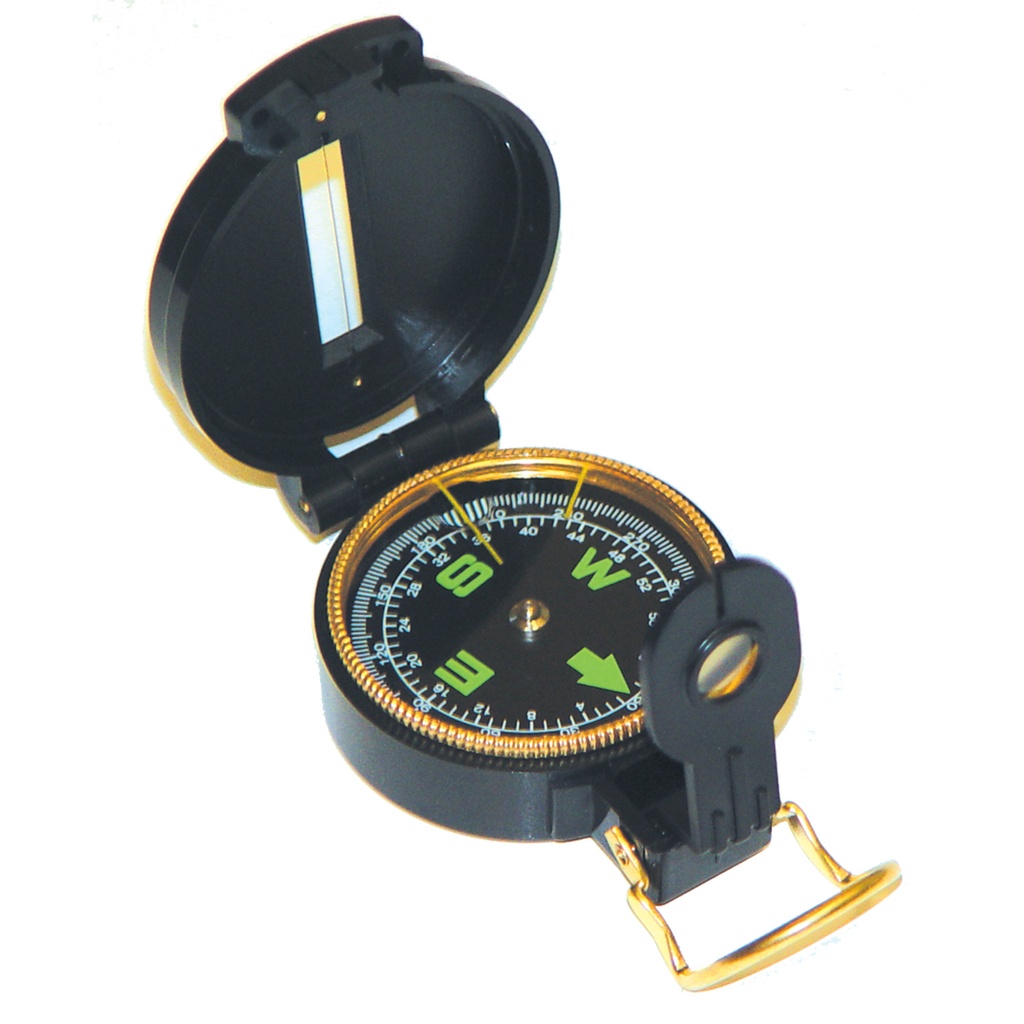
A pocket-sized hiking compass like this lensatic field scout is built for precisely that moment. You unfold the lid, lift the sighting lens, and you’re holding a simple way to make a decision you can stand behind. The black dial and bold green cardinal letters lock your attention; the white degree marks give you a bearing you can actually read, not squint at.
Instead of “I think this is the way,” you hear yourself say, “Our bearing is here—this is where we go.” That shift, from guessing to knowing, is why this kind of navigation tool earns its space in your everyday hiking kit.
Why This Hiking Compass Earns a Spot in Your Pack
You’ve probably seen plenty of cheap plastic compasses that feel like toys. This one doesn’t try to impress you with bulk or fake toughness. It goes the other way—small, straightforward, and made to disappear into your pocket until you actually need it.
The black housing keeps reflections down and wear marks quiet. The gold-tone bezel and thumb loop aren’t about flash; they add a little visual confidence and durability so you’re not babying it on rock or in a crowded pack. When you slide your thumb into the loop, the compass settles into your grip, steady and centered, so the needle can do its job without your hand shaking the whole reading.
The lensatic design—the flip-up sighting lens and the tight sighting wire in the lid—gives you a field method that’s been used for generations. You pick a landmark on the horizon, line it up with the wire, glance through the lens, and the bearing is right there. That’s the moment you notice the design decision that matters: those bright green markings on a black dial aren’t just pretty, they mean you actually see your bearing in shadow, dusk, and under tree cover.
From Pocket to Trail: How a Hiking Compass Fits Your Real Life
Gear only matters if you actually carry it. This compact lensatic compass is made to live in real pockets, not just on gear lists.
On a quick after-work hike, it drops into the small zip pocket of your daypack or rides unnoticed in a cargo pocket. You don’t feel it bouncing, snagging, or demanding its own pouch. On a weekend trip, it slips into your map case or survival tin, ready for when fog rolls in or a trail marker is missing.
Out with a scout troop or friends newer to the outdoors, you become the person who quietly pulls out a pocket compass when the group starts debating which way camp is. You line up the sighting wire, call out the direction, and watch the tension drop a notch. This is how a small piece of navigation gear turns you from “person who hikes” into “person others trust to get them home.”
When a Pocket Compass Matters More Than a Phone
You’re not anti-tech. You probably plan routes on apps, download maps, and check elevation profiles like everyone else. But you also know that batteries die faster in cold, tree cover can block signal, and a dropped phone can turn a smart plan into a fragile one.
That’s where this pocket hiking compass becomes more than backup—it’s your analog baseline. When your phone’s arrow doesn’t quite line up with the ridge ahead, you open the lensatic compass, take a bearing, and confirm what your eyes and gut are already telling you. That double-check is the difference between committing to the wrong valley and adjusting early while it’s still easy.
In a survival kit or glovebox, this compact navigation tool holds its place quietly. No updates, no pairing, no settings. It doesn’t care if it’s been a week or a year since you last used it—open, level, sight, decide. That’s the kind of low-drama reliability you only miss when you don’t have it.
Questions People Ask Before Buying a Hiking Compass
Do I really need a hiking compass if I already use my phone?
If you only walk paved paths, maybe not. But once you’re on real trails, a hiking compass gives you something your phone can’t: a battery-free, signal-proof way to verify your direction. It’s not about replacing tech; it’s about having a quiet check when the map on your screen and the land in front of you don’t quite agree.
Is a lensatic pocket compass hard to learn?
No. The lensatic style looks technical, but you’ll get the basics in minutes. Open the lid, line the sighting wire with a landmark, look through the lens, and read your bearing. After a hike or two, using this pocket compass will feel as natural as checking a watch.
Will a compact hiking compass like this hold up in real use?
It’s built for being knocked around in a pack, glovebox, or pocket. The folding lid protects the dial, the thumb loop tucks away, and the black housing shrugs off scratches. It’s the kind of pocket hiking compass you can throw into a scout kit or emergency bag and trust to be ready when you open it again.
Is this pocket compass good for teaching kids or new hikers?
Yes. The bold green letters on the black dial and clear white degree marks make directions easier to see and explain. The hands-on act of sighting a landmark and reading a bearing is a simple way to teach real navigation skills, not just “follow the blue line” on a screen.
Picture your next trail: the light’s going soft, the air’s cooling, and the chatter behind you quiets as the path splits in two. You reach down—not for your phone first, but for the compact hiking compass you’ve started carrying as naturally as your keys. The lid flips open with a motion you don’t have to think about. Thumb in the loop, wire on the ridge, bearing through the lens. You call the direction, and everyone moves with you without question.
That’s who you become with a simple pocket compass in your kit: the person who doesn’t panic when the trail fades, who makes steady choices when the light changes, who brings a quiet kind of confidence to every hike. The landscape doesn’t feel uncertain anymore—it feels readable. And you’re the one who knows how to read it.