Forgegrain Heritage Hand Forged Cleaver - Brown Pakka Wood
You clear a space on the counter, and your hand forged cleaver catches the light before dinner begins. Beneath your fingers, the curved brown Pakka Wood handle feels smooth; across the blade, irregular grooves meet a bright bevel. You notice the contrast while someone behind you asks what you're making. Choosing your tools starts to feel like choosing how you spend your time: with attention, not hurry. You learn the steel, dry it after the work, and make room for something you intend to keep.
| Blade Length (inches) | 7.75 |
| Overall Length (inches) | 12.5 |
| Blade Color | Silver |
| Blade Finish | Hammered |
| Blade Style | Cleaver |
| Blade Edge | Plain |
| Blade Material | 1080 High Carbon Steel |
| Handle Finish | Polished |
| Handle Material | Pakka Wood |
| Theme | Hand Forged |
| Handle Length (inches) | 4.75 |
| Tang Type | Full |
| Pommel/Butt Cap | None |
| Carry Method | Lanyard |
You move yesterday's mail off the counter, set down the cutting board, and finally give dinner your full attention. Beside you, a hand forged cleaver catches the light along its bright bevel. The brown wood grain feels at home beside the board, not like something borrowed from a restaurant kitchen. You wanted a tool with character, but you also wanted to know what sits beneath that character. This hand forged cleaver gives you specific details to consider: 1080 high carbon steel, full tang construction, and a handle shaped with a noticeable curve.
When a Hand Forged Cleaver Makes You Slow Down
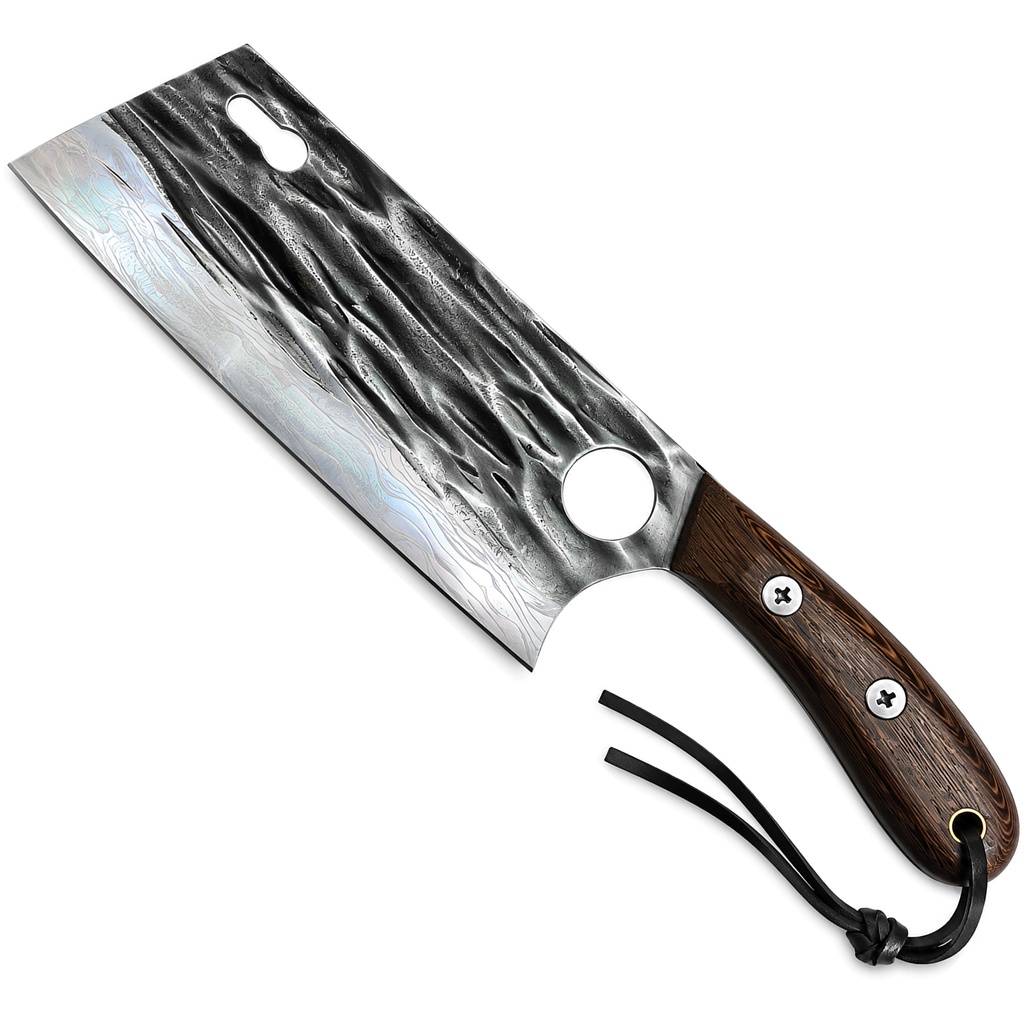
You notice the blade before you notice anything else. Deep, irregular grooves cross the broad surface, while a brighter bevel creates a clear visual break below them. That contrast is what makes this hand forged cleaver feel grounded rather than decorative: rough texture above, a defined working edge below. The warm Pakka Wood brings the design back to something familiar.
The light moves; the grooves stay different
Turn your hand forged cleaver slightly and the hammered surface changes with the light. You can see a keyhole-shaped opening near the tip and a circular opening nearer the handle. Neither needs an invented purpose to be interesting. If you enjoy looking closely at your tools, those details give you something more honest than a printed graphic.
You get a plain edge rather than serrations, so your sharpening routine centers on one continuous cutting edge. Choosing a hand forged cleaver here means choosing visible texture without confusing that texture with proof of cutting performance. You can appreciate the appearance and still ask practical questions.
Living With a Hand Forged Cleaver Means Knowing the Steel
You have probably seen knives described as tough without anyone naming the material. Here, you can start with 1080 high carbon steel. Your carbon steel cleaver needs a different care routine from a stainless alternative: clean it after use, dry it thoroughly, and protect it appropriately before storage. Leaving it wet in the sink is not a harmless shortcut.
With this hand forged cleaver, that small habit becomes part of ownership. You finish the task, wash carefully by hand, and dry around the blade openings as well as the edge. If you store it for a while, a suitable food-safe protective oil can help limit corrosion.
You also get full tang construction, meaning the blade steel continues through the handle. That gives you a concrete construction detail to weigh when comparing a full tang cleaver with another design. It does not tell you the heat treatment, hardness, or edge retention; those specifications are not provided.
Your hand forged cleaver deserves expectations based on what is known. You know the steel and construction, but sharpening frequency will still depend on your cutting surface, technique, and actual use.
Make Room for the Tool You Actually Chose
Before you picture everyday use, picture where your cleaver knife will live. At 12.5 inches overall, with a 7.75-inch blade and a 4.75-inch handle, this is not a pocket companion. You need suitable protected storage and enough clear workspace to handle a broad fixed blade deliberately.
A smooth handle after the counter is cleared
When you pick up your hand forged cleaver, you meet polished brown Pakka Wood rather than a rough handle surface. You can see two silver handle screws, pronounced grain, and a brass-colored eyelet holding a black cord. The curve gives your hand a shape to evaluate; your own grip and hand size determine comfort.
You should not mistake the included lanyard for edge protection. When transporting this hand forged cleaver, use an appropriately fitted protective cover or secure knife storage; no sheath is specified. Keep the cord clear of your work, too.
Your readiness comes from those ordinary decisions. You clear the board, keep your hands dry, and put the blade away safely afterward. A full tang cleaver becomes part of your routine through attention, not through the suggestion that a substantial-looking knife can handle anything.
A Hand Forged Cleaver vs. a Familiar Kitchen Knife
If you are comparing this hand forged cleaver with your usual chef's knife, start with the work rather than the silhouette. You gain a broad, plain-edge blade and a distinctly different form. You do not automatically gain permission to strike bones, cut frozen food, or twist the edge through a stubborn joint.
No bone-chopping rating is supplied for this hand forged cleaver. Blade thickness, weight, hardness, and grind measurements are also unspecified. If heavy chopping is your main reason for buying a cleaver knife, ask for those details before deciding. You deserve a clear answer rather than an assumption based on appearance.
You can make a similarly practical carbon steel vs. stainless steel comparison. Your carbon steel cleaver asks for prompt drying and corrosion awareness; stainless generally offers greater resistance to rust, though it still needs care. Neither material label alone settles which knife will suit you better.
Choose this hand forged cleaver because its known construction and maintenance needs fit your habits. You can enjoy the heritage styling without turning it into a claim about indestructibility.
Questions People Ask Before Buying a Hand Forged Cleaver
Will this cleaver rust if I leave it wet?
Yes, your hand forged cleaver uses 1080 high carbon steel, which can rust when exposed to moisture. Hand-wash it, dry it promptly, and use suitable protection during storage instead of leaving it soaking or putting it in a dishwasher.
Can I use this cleaver to chop through bones?
You should not assume this hand forged cleaver is suitable for bone chopping because it has a broad blade. A bone-chopping rating and key dimensions such as blade thickness are not supplied, so confirm suitability before attempting that work.
Can I legally carry it to a campsite?
Whether you can transport or carry this hand forged cleaver depends on your jurisdiction, destination, and circumstances. Check local fixed-blade laws and campsite rules, and transport it securely with the edge protected; the lanyard does not make exposed carry safe.
The first time you bring your hand forged cleaver to the board, you clear a proper space and take a moment to settle your grip. Later, you dry the steel before answering the message on your phone. That is the ownership you pictured: not a different personality, just your own attention made visible in the things you choose and how you look after them.