Full-Wave Forge Precision Meat Cleaver - Brown Pakkawood
You know that moment when the board is loaded, guests are on the way, and you need one tool you don’t have to baby? That’s where this full-size meat cleaver steps in. Hand-forged 1080 carbon steel, rippled like cooled lava, drops clean through dense cuts while the brown pakkawood handle settles into your grip like it was made for your hand. You stop wrestling with prep and start moving with it—rhythmic, confident, in control. This is the meat cleaver you reach for without thinking.
| Blade Length (inches) | 7.75 |
| Overall Length (inches) | 12.5 |
| Blade Color | Silver |
| Blade Finish | Rippled |
| Blade Style | Cleaver |
| Blade Edge | Plain |
| Blade Material | 1080 high carbon steel |
| Handle Finish | Glossy |
| Handle Material | Pakkawood |
| Theme | Rippled Blade |
| Handle Length (inches) | 4.75 |
| Tang Type | Full Tang |
| Pommel/Butt Cap | Exposed tang |
You’re standing at the board, the kind of night where the food matters as much as the people. There’s a pile of short ribs, a stubborn squash, maybe a rack you want to portion just right. This is usually where you start negotiating with whatever knife is closest—sawing, twisting, hoping it won’t slip. Not tonight. Tonight, you reach for the one tool that feels inevitable the moment it hits the board: your full-size meat cleaver.
How a Meat Cleaver Changes the Way You Cook
The first time you put a real meat cleaver to work, you notice something simple: heavy prep stops being a fight and starts feeling like rhythm. A full 7.75 inches of working edge in 1080 high carbon steel meets the board with a soft, dense thud instead of that nervous, chattering tap you get from a too-light chef’s knife. Bone, cartilage, dense veg—things you used to avoid suddenly feel manageable.
This isn’t about showing off. It’s about walking into your own kitchen and knowing you have a tool built for the jobs you actually do. Breaking down pork shoulder. Splitting chicken thighs. Dropping through racks for the smoker. You stop babying your knives and start letting the meat cleaver do what it was made to do.
The Meat Cleaver That Looks Forged for Your Hands
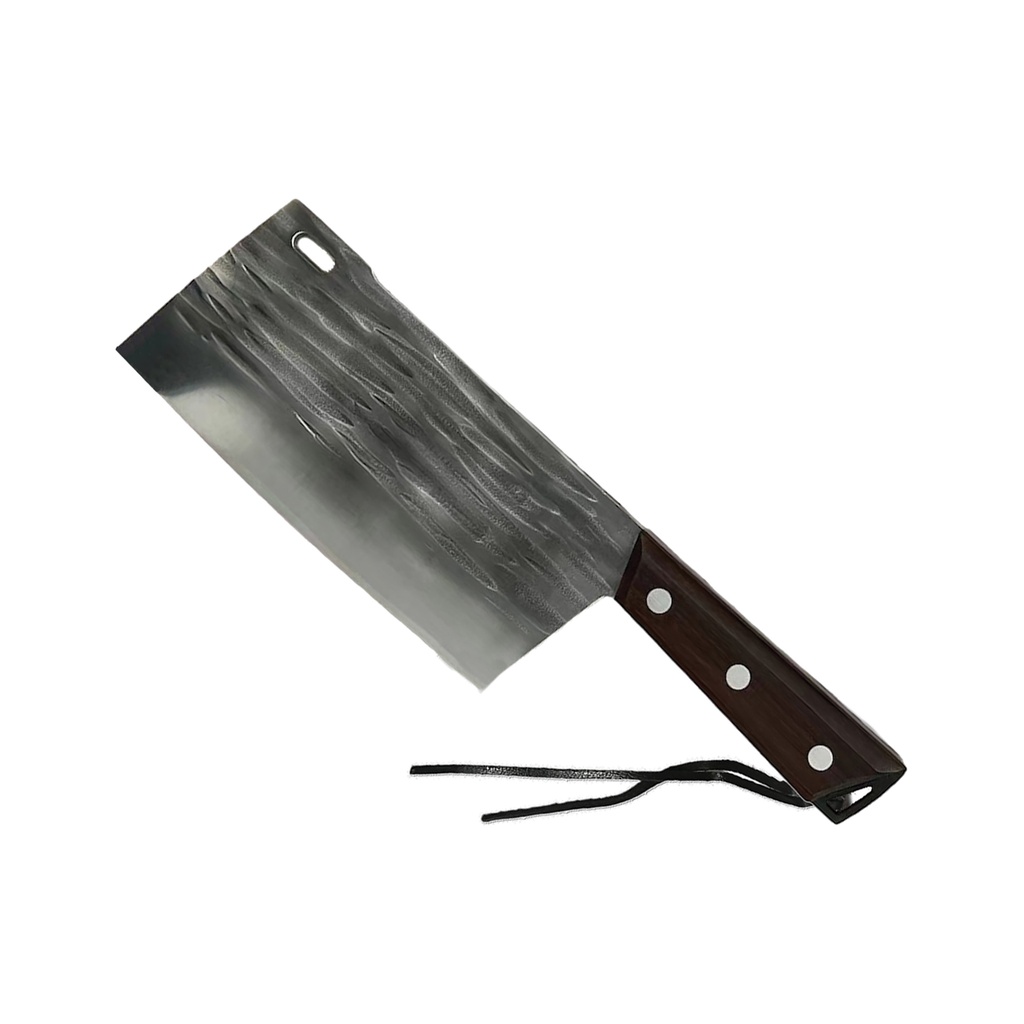
Run your thumb lightly along the upper face of the blade and you feel it: the rippled, full-wave texture from the forging process. Not some laser-etched pattern, but the honest, wavy marks of 1080 high carbon steel that’s been worked hot and finished to cut. The lower edge is clean, polished, and ready, while the upper half keeps that hammered, rolling wave that tells a quiet story every time light hits it.
Then your hand closes around the brown pakkawood handle and the design clicks. It’s glossy but grounded, shaped to fill your palm instead of fighting it. Full-tang steel runs straight through to the exposed butt, locked in place by three silver rivets you can actually see, not just trust on a spec sheet. That combination—solid steel core, pakkawood scales, honest rivets—gives you that old-world butcher confidence in a tool you didn’t have to pull from an antique shop.
Why This Meat Cleaver Feels So Stable on the Board
If you’ve ever swung a cheap cleaver, you know the feeling: top-heavy, awkward, a little unpredictable. This one corrects that the second you pick it up. At 12.5 inches overall with a 4.75-inch handle, the proportions give you leverage without feeling like you’re swinging an axe. The weight sits forward enough to power through dense cuts, but the pakkawood grip and full tang keep everything aligned straight down through your knuckles.
That little cutout near the spine isn’t just visual flair—it’s a subtle cue that reminds you where the balance lives. Your pinch naturally finds its place, your wrist stays relaxed, and each drop of the blade becomes more about guiding than forcing. You’re not white-knuckling your way through prep anymore. You’re stacking clean cuts, quick chops, and decisive splits while the board fills with the kind of food that makes people wander into the kitchen just to watch.
From Backyard Smoke Sessions to Weeknight Rush: When a Meat Cleaver Makes the Difference
Picture two different nights. On one, it’s Saturday, the smoker’s rolling, and you’ve got a tray of ribs, a brisket point, maybe some wings you want to section by feel. On the other, it’s Tuesday, you’re tired, and a pile of chicken and root veg stands between you and dinner. The constant in both scenes is this: when you own a dedicated meat cleaver, those jobs stop feeling like special occasions and start feeling like part of your normal rhythm.
That 1080 high carbon steel takes an edge that bites into cartilage instead of skidding off it. A full-tang build means you can choke up for detailed work or slide back on the handle when you want to let the weight do the talking. You’re no longer wondering which knife is best for breaking down a bird or crushing through a joint; you already have the answer on the block. The meat cleaver becomes your anchor, the one blade that earns its spot front and center.
The Sound and Feel That Tell You It’s Working
You’ll start to recognize the difference by sound. Not the high-pitched ring of a thin blade flexing, but a deeper, solid contact as the cleaver meets the board. The rippled face flashes under the lights, the pakkawood warms under your grip, and you feel the clean separation of each cut instead of fighting for it. It’s a quiet kind of satisfaction, the kind that keeps you at the board a little longer than you need to be.
Carrying Confidence from the Block to Every Cook
Owning a meat cleaver like this isn’t about adding another toy to the drawer; it’s about changing how you show up to cook. When you know your heavy hitter is dialed in—full tang, forged 1080 carbon steel, comfortable brown pakkawood handle—you start volunteering for the big jobs. Friends ask, “Can you handle the ribs?” and you don’t even hesitate. You’ve already pictured the blade sliding through the rack.
The exposed tang with its lanyard cord gives you options too. Hang it within easy reach over the board, or secure it when you pack up your kit for a cookout or cabin weekend. Either way, you’re not hoping someone else brought the right tool. You are the one who did.
Those Small, Real-World Moments
There’s that one stubborn squash you used to dread. The big brisket you always asked the butcher to portion. The chicken you used to hack up with a tired chef’s knife. Over time, you start to notice those moments shrinking. What used to be obstacles are now just quick, confident motions: a set, a drop, a clean split, a smooth follow-through. The meat cleaver fades into the background. The only thing that stands out is how much more at ease you feel.
Questions People Ask Before Buying a Meat Cleaver
Will this meat cleaver hold up to everyday kitchen use?
Yes. The 1080 high carbon steel blade and full-tang construction are built to live on your board, not in a drawer. Treat it like any quality meat cleaver—wash, dry, and store it with basic care—and you’ll have a heavy-use tool that stays ready for daily prep as well as big cooks.
Is a meat cleaver like this hard to control?
It actually makes control easier once you get used to letting the weight work for you. The 12.5-inch length, balanced blade, and brown pakkawood handle keep your hand stable, while the full tang provides a solid, predictable feel. Instead of forcing cuts, you guide the meat cleaver and let its own mass do the heavy lifting.
What’s the benefit of 1080 high carbon steel in a meat cleaver?
1080 high carbon steel sits in a sweet spot for a meat cleaver: tough enough to take impact on bone and dense cuts, but capable of holding a keen working edge. That means you spend less time sharpening and more time actually cooking, with a blade that feels dependable across a wide range of heavy prep.
Can I use this meat cleaver for more than just meat?
Absolutely. While it excels at ribs, poultry, and big cuts, you’ll also use it on hard veg, herbs (the flat side is great for crushing), and sectioning larger fruits. Owning a dedicated meat cleaver just gives you permission to stop babying your main knife and reach for the tool that makes tough jobs simple.
Picture your next cook: the board is loaded, the room buzzing, and you reach for the one blade that quiets all the noise. Your hand finds the brown pakkawood handle, your eyes follow the rippled, forged steel of the blade, and suddenly you’re not wrestling with prep—you’re directing it. That’s what owning a real meat cleaver does. It doesn’t make you someone else; it lets you be the version of yourself who looks at big, messy, ambitious cooking and thinks, “Yeah, I’ve got the right tool for this.”