Shadow Upright Access-Control Caltrops - Black Steel
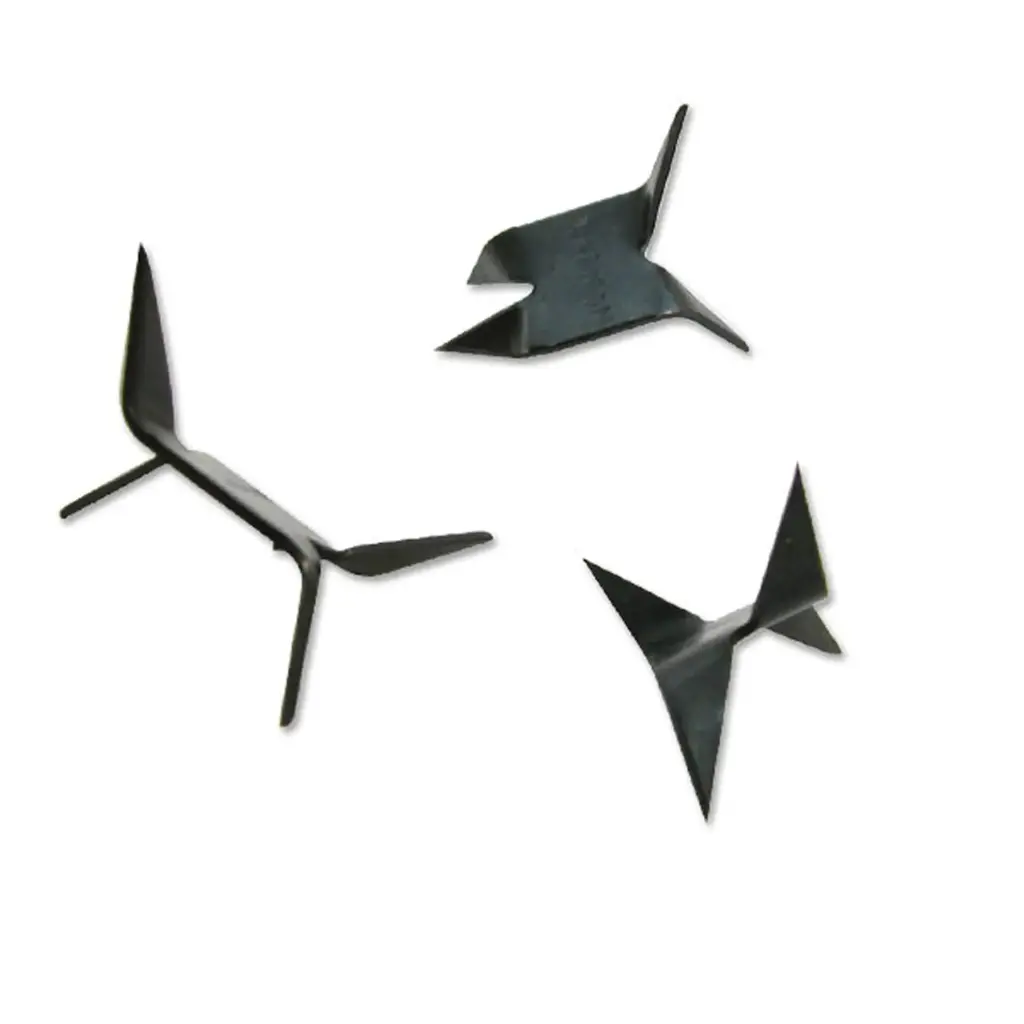
You don’t shout for control—you lay it down quietly. With these tactical caltrops in your hand, access control stops being theory and becomes something you can feel in your palm: cold black steel, four-point geometry, always upright when they land. You move, they fall, the space behind you changes. No drama, no theatrics—just a clean, simple line between where people can go and where they don’t. If you like knowing the ground itself can answer to you, these belong in your kit.
The hallway feels different when you know the ground can say “stop” for you. It might be a training lane, a back stairwell, a private drive, or the narrow choke-point to a shed full of gear. You walk it once, slow, fingers feeling the weight of black steel in your pocket. You’re not looking for attention. You’re looking for control. That’s the quiet confidence of carrying tactical caltrops you trust.
When tactical caltrops turn space into something you control
You’ve probably felt it before: that edge-of-your-awareness moment when an open path behind you doesn’t feel as empty as it looks. You can’t close a door that isn’t there, and you can’t lock down a field, alley, or lane with a keypad. But you can change how that ground behaves.
That’s what these tactical caltrops are really about. Not drama. Not movie scenes. Just a simple, repeatable way to make access more costly to anyone who isn’t invited. Four sharp points of black steel, folded so that no matter how you toss them, one spike is always up and ready. You don’t have to think about orientation or angle—your hand moves, they drop, and the space behind you stops being neutral.
If you’ve ever tried to improvise obstacles—loose boards, makeshift spikes, debris—you know how inconsistent and clumsy that can feel. Here, the geometry does the thinking. You keep your attention on the situation, not on whether your last throw mattered.
Why these tactical caltrops land upright when everything else is chaos
There’s a small kind of satisfaction in watching one of these for the first time. You open your hand, let a piece of black steel fall, and it hits the floor, clinks once, then settles point-up like it chose that position on purpose. That always-up landing isn’t an accident; it’s the entire point.
Each unit is cut and folded from steel into a four-point shape, but what matters to you is the way those angles work together. However you drop or scatter them—overhand, underhand, backwards as you move—they fight to rotate into an upright stance. In low light, you feel the cold edges and don’t worry about which side is which. You just know that the ground behind you is no longer just ground.
The modern black finish does more than look good in a kit photo. It cuts glare when you’re under bright lights and blends into darker surfaces when you’re not. You’re not carrying shiny hardware that screams for attention; you’re carrying quiet control that shows up only when it needs to.
The feel of black steel in a real-world moment
Picture a late-night walk out to your outbuilding or range shed. Gravel underfoot, a flashlight beam you don’t love having to use. That uneasy awareness that if someone wanted to follow, it would be easy. With these in your pocket, your hand dips once, scatters a few behind you, and keeps moving. No announcement. No big gesture. Just the subtle comfort that anyone charging down that path now has to think twice.
Tactical caltrops that disappear into your kit until the second you need them
The difference between fantasy gear and real tactical gear is simple: the real stuff actually comes with you. A 10-pack of compact caltrops slides into the corner of a pouch, the side pocket of a training bag, or the slip pocket in a vehicle organizer without demanding space or attention. They live there, forgotten, until the day you reach back and find them without looking.
If you’re building out a broader access-control setup—locks, cameras, lights, alarms—these become the low-tech, low-profile layer that doesn’t care about batteries, networks, or signals. They just sit in your hand, then on the ground, and change the calculations for anyone pushing into your space.
Carrying them becomes part of how you think
After a while, you stop thinking of them as one more piece of tactical gear and start thinking of them like you think of a good everyday carry blade: just there, just ready. You might keep a strip of them wrapped in a rubber band in your range bag. A couple loose in the glove compartment. A handful in the back pocket of the bag you always grab when something feels off. The point isn’t paranoia. It’s that small shift from “I hope nothing happens” to “If it does, I have options.”
When tactical caltrops change the story of what’s possible
There’s a before and after with tools like this. Before, open ground is just that: open. After, you start to see lanes, choke points, tight spaces, and approach routes as things you can shape. In training environments, that means you can design more honest scenarios—ones where careless movement has consequences. In private security or personal preparedness, it means you can give yourself time, warning, or both.
Because these caltrops are simple black steel with a minimalist silhouette, they adapt to whatever story you’re in. They can be a physical demonstration tool in a classroom, a last-ditch access denial layer in a kit, or a controlled training hazard to teach younger or newer team members what “watch your step” really means.
And unlike noisy, tech-heavy solutions, they don’t announce themselves in advance. There’s a reason old-school methods survive: they work, quietly, and they don’t ask you to babysit them.
Questions people ask before buying tactical caltrops
Are tactical caltrops actually useful for real-world access control?
If you’ve ever wished you could slow a vehicle, bike, or person without shouting or firing a shot, tactical caltrops give you a simple way to do that. They won’t replace cameras or locks, but they add a physical layer of access control that doesn’t depend on power, signal, or software to work.
How many tactical caltrops do I need to make a difference?
It depends on the space you’re trying to influence. A 10-pack is enough to cover a doorway, hallway, stair run, or narrow path with intention. For wider driveways or training environments, multiple packs let you build lanes and patterns so you can create real hesitation or force a change of direction.
Are tactical caltrops legal to own and carry?
Legality can vary a lot depending on where you live and how you plan to use them. In many places, owning tactical caltrops as part of a training setup or preparedness kit is allowed, but deploying them in public or in ways that create uncontrolled hazards can cross legal lines fast. It’s on you to check your local laws and use them responsibly.
Will these tactical caltrops hold up to repeated use in training?
They’re black steel with a folded, four-point geometry, so they’re built to take hits, scuffs, and repeated deployment on hard surfaces. In a training context, that means you can throw, collect, and reset them across multiple sessions without babying them—just expect the finish to pick up honest wear like any real tool.
There’s a moment the first time you scatter them in a live-feeling scenario. Your hand opens, cold black steel leaves your fingers, and you hear the brief, sharp music of caltrops meeting floor. Then silence—but a different kind of silence. You step forward, not backward, because you’ve already shaped the space behind you. From that point on, carrying tactical caltrops becomes less about what they are and more about who you are when you have them: someone who doesn’t just move through ground, but defines it.