Embergrain Hand-Forged Cleaver Knife - Brown Pakka Wood
With this cleaver knife beside your board, you turn the radio down and give dinner your full attention. Your thumb finds the rounded brown Pakka wood handle; beneath the kitchen light, the bright edge stands apart from the dark forging marks. You start with the vegetables waiting beside a chipped ceramic bowl. There’s something satisfying about choosing a tool whose character belongs in the work, not behind glass. As the ingredients become a meal, you settle into the quiet pleasure of making something yourself.
| Blade Length (inches) | 8 |
| Overall Length (inches) | 12.75 |
| Blade Color | Silver |
| Blade Finish | Rough-forged |
| Blade Style | Cleaver |
| Blade Edge | Plain |
| Blade Material | 1080 high carbon steel |
| Handle Finish | Polished |
| Handle Material | Pakka wood |
| Theme | Hand Forged |
| Handle Length (inches) | 5.25 |
| Tang Type | Full |
| Pommel/Butt Cap | None |
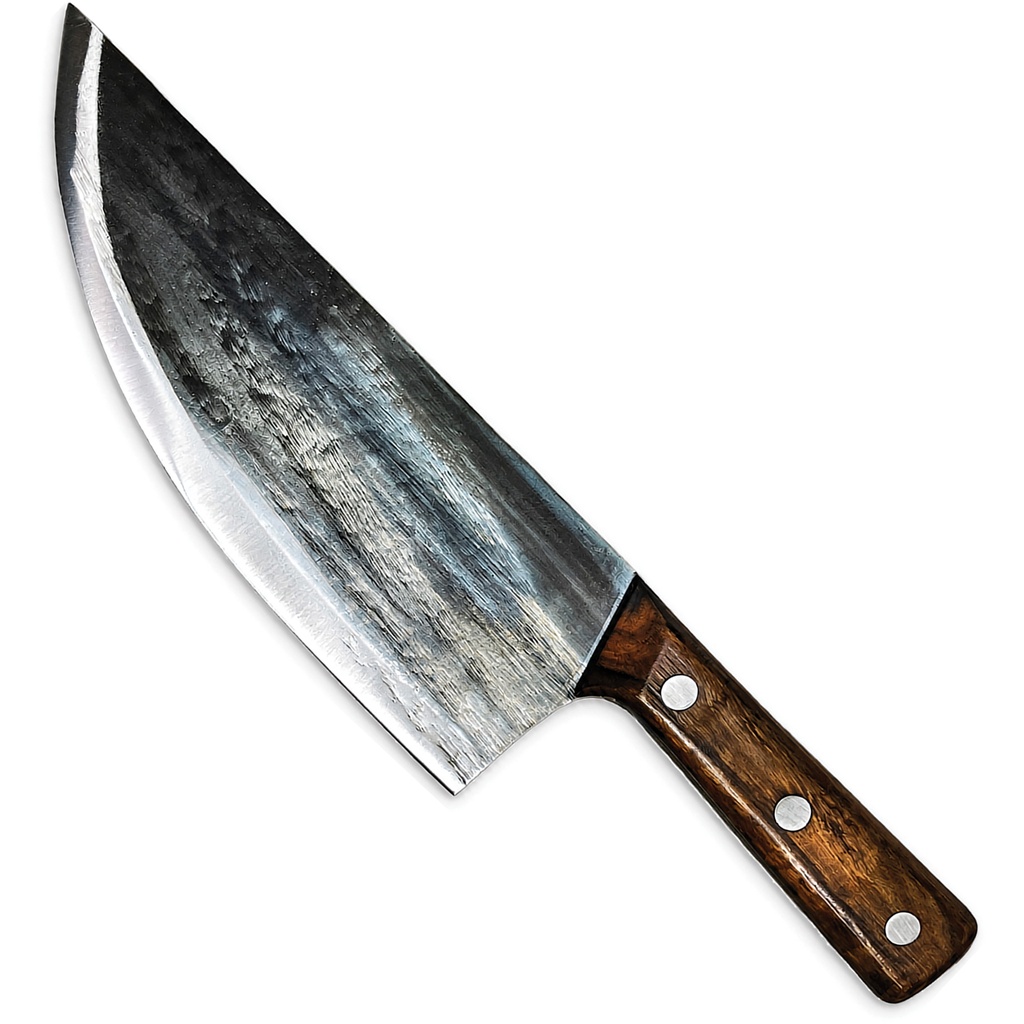
The cleaver knife rests beside your cutting board while an onion rolls against the bowl you always use for scraps. Dinner is still a collection of ingredients, and you have a little time to make something of them. You wrap your hand around the brown Pakka wood handle and turn the broad blade toward the light. Across its dark, textured face, a bright silver bevel draws a clear line. Before the first cut, you already know why this particular tool belongs in your kitchen: you like useful things with visible character.
A Cleaver Knife That Belongs Beside Your Board
You don’t need a special occasion to enjoy the tools you cook with. A Tuesday evening, a wooden board, and a few ingredients are enough. With an 8-inch blade, you have a broad working profile that makes its presence clear before you begin. The plain edge sweeps upward toward the pointed front, giving you a shape to get acquainted with rather than a straight chopping edge that asks for one repeated motion.
Look closely and you’ll see what makes the design feel coherent: irregular hollows across the blade meet a clean, bright cutting bevel, while the flowing handle grain softens that rugged appearance. You get the visual honesty of a workshop tool without losing the warmth you want around food and the kitchen table.
When the overhead light catches the steel
As you turn the blade, the elongated forging marks move between shadow and silver-gray. You notice texture rather than a printed pattern. Three round silver pins repeat that quieter metallic detail along the handle. Nothing about the combination asks you to keep it untouched; its appeal makes sense right where you’re standing, with dinner underway.
Getting to Know Your Cleaver Knife, Cut by Cut
You’re working with 1080 high carbon steel, a material that makes a simple care routine part of ownership. After preparing food, wash the blade by hand and dry it promptly. Don’t leave it beneath damp peelings while you eat. That small habit matters more than admiring the finish, especially when your cooking includes acidic ingredients or a wet workspace.
Running between the handle scales, the full tang continues the steel through the grip. You can see that construction at the handle edges rather than having to imagine what sits inside. The polished Pakka wood scales have rounded edges, and the butt flares gently without a separate cap. When you pick it up, those are the details your hand meets, not decorative extras that only work from a distance.
At 12.75 inches overall, this is a kitchen tool you give a proper place, not something you tuck loose into a crowded utensil drawer. You’ll want room on the board and protected storage afterward. Building those habits into your cooking keeps the edge away from loose utensils and makes the next preparation session easier to begin.
Make Room for a More Deliberate Kitchen Routine
You know the difference between cooking and merely getting food onto a plate. Sometimes it’s no more than clearing the counter before you begin. Set out your ingredients, steady your cutting board, and leave yourself enough space to work without a saucepan handle crowding your wrist. A broad kitchen blade feels more at home when your setup gives it room.
The handle grain beneath your fingers
Under the kitchen light, you can follow golden-brown lines through the darker handle grain. The polished surface contrasts with the rough-forged blade face, giving your eye two distinct textures to settle on. You don’t need to turn a practical purchase into a display piece to appreciate that difference. You can enjoy it while the onions wait.
The projecting heel creates visible clearance below the handle, a detail you’ll notice when positioning your hand above the board. Take time to establish a comfortable grip and controlled movement. Familiarity comes from paying attention to the tool in front of you, not from trying to copy someone else’s speed. Your dinner doesn’t need a demonstration; it needs your care.
Cleaver vs. Chef’s Knife: Choose the Shape You’ll Enjoy Using
If you’re choosing between this broad blade and a narrower chef’s knife, start with how you like to work. Here, you get a substantial blade face, a nearly straight spine, and a plain edge that curves toward a pointed front. Those features create a different visual and working profile from the familiar tapered shape of many everyday kitchen knives.
Let the shape guide your expectations rather than the rugged appearance alone. For everyday kitchen work, favor controlled cuts on a suitable cutting board rather than twisting the edge or striking hard surfaces. You’re choosing a cutting tool, and treating it that way helps keep your attention on the food and your movements.
You can also make room for both shapes without turning your kitchen into a collection. Keep the tools that earn their place through use. If the textured steel and warm handle make you want to slow down and prepare dinner yourself, that’s a meaningful part of the choice. So is being willing to wash, dry, and store it properly afterward.
Questions People Ask Before Buying a Cleaver Knife
How do I keep a high carbon steel cleaver from rusting?
Wash your cleaver knife by hand, dry it thoroughly, and store it somewhere dry. For longer storage, a light coating of food-safe blade oil helps protect the steel; wipe it appropriately before preparing food.
How do I choose a cleaver for home cooking?
Consider the blade shape, dimensions, handle construction, and care routine you’re comfortable maintaining. With this cleaver knife, you’re choosing an 8-inch curved plain edge, full-tang construction, and polished Pakka wood scales.
Is a cleaver knife legal to carry where I live?
Laws on this type of product vary by state and city. Check the law where you live and carry.
You finish preparing dinner, rinse the blade, and dry the last bead of water near the handle. For a moment, the bright bevel catches the light again before you put everything away. Your cleaver knife has become part of an ordinary evening made with attention: a clear board, food you prepared yourself, and the quiet satisfaction of looking after the tools you chose.